
When AI takes over your craft
Expand the table of contents
‘Efficiency is not enough’ – Drucker shifts the focus to impact
‘From loom to map’ – Anna’s new role as questioner and manager
‘I’m drowning in work’ – Organised abandonment and the courage to let go
‘My boss just wants more output’ – Managing the boss in the AI era
‘Will I still be relevant in five years?’ – Monoculture of intelligence and the value of humanity
An imaginary conversation between Peter Drucker and senior marketing manager Anna, who is both fascinated and frightened by artificial intelligence
This is the second part of a series of fictional conversations. In it, Peter Drucker meets well-known figures and people like you and me. People with different roles in organisations who embody technological optimism, pragmatic application, historical caution and economic reality. Today, he meets Anna (34) in a cosy sitting area in a business hotel. She is a senior marketing manager and has just listened to an inspiring lecture by Peter Drucker on artificial intelligence. She feels overwhelmed by the AI wave and is partly fascinated, partly frightened, partly frustrated. Her agency and her team use AI, and her company has just announced an ‘AI-first’ strategy without knowing what that means.
‘I used to be the doer’ – Anna’s identity crisis in the AI wave
Anna: “Mr Drucker, I’ll be honest: I’m scared. I used to get paid because I could write good copy and think strategically. I’m an experienced expert in various types of marketing campaigns. Today, ChatGPT does the first draft and Midjourney paints the pictures in 30 seconds. We’re now pushing an absurd amount of content through the system, probably ten times as much as before. I’m basically just standing at the crossroads waving all the generated stuff through. What is my job still worth if the machine takes over my work and does it so much faster?‘
Peter Drucker: ’Ten times the amount, I see. That sounds really impressive. But be honest: does that also bring in ten times the revenue? Or are you just turning up the volume without anyone really listening?‘
Anna: ’No, of course the revenue doesn’t increase tenfold. And in fact, the click rates are also declining slightly, but at the same time we are more present. We are also much more efficient.”
‘Efficiency is not enough’ – Drucker shifts the focus to impact
Peter Drucker: “Be careful: you are confusing movement with progress. That is the classic mistake in times of technological upheaval. What you are describing is the victory of efficiency over effectiveness. Do you remember the central message of my lecture? Efficiency means doing things right. Effectiveness means doing the right things.‘
Anna: ’That’s right, I found that passage particularly interesting. However, I haven’t quite understood it yet. Or rather, I don’t know what it has to do with me. It feels like my craft is being taken away from me. I spent years learning to write. If I delegate that to AI now, I’ll lose my identity and eventually my job. Who am I if I’m no longer the “maker”?‘
Peter Drucker: ’You’re feeling the pain of transition, Anna. It’s the same pain that hand weavers felt when the mechanical loom came along. But let’s analyse this brutally honestly: were you really paid for typing? Or were you paid for the impact your texts had?
Many knowledge workers cling to routine because it provides security. Filling a blank sheet of paper yourself gives you the feeling of work and “I’ve achieved something!”. Unfortunately, the market does not reward effort, only the end result. You first have to come to terms with the loss of the pure craft of writing. That is the basic prerequisite for growing into a role that involves strategic thinking and real decisions.‘
Anna: ’Wait a minute, that’s too fast for me. I’ve always thought while writing. And I’ve made decisions while writing. Are you saying that I’ve just been doing stupid and very simple manual labour?‘
Peter Drucker: ’I’m sorry, I didn’t express myself clearly enough, you misunderstood. AI is forcing you to grow up faster and adapt to the changed conditions. You can no longer hide behind the manual execution. AI has turned your work into a commodity. Writing and layout are now cheap. But the question of which pattern should be woven and why this pattern should be woven is your real task. Have you neglected this so far because you were too busy with the “weaving”?”
Anna: ‘Mr Drucker, I need to let that sink in first. It sounds so simple. And it’s strong stuff for me! What I still don’t understand is this: we are so efficient! We flood all channels.’
Peter Drucker: “Careful again. Think again about my principle of efficiency and effectiveness. There is nothing more useless than doing something with high efficiency that should not be done at all. If you now use artificial intelligence to simply blow more mediocre noise onto the internet, then you have only accelerated ineffectiveness. AI is a machine for answers. Your new role is to be the questioner. AI provides the map, but you have to determine the destination.”
‘From loom to map’ – Anna’s new role as questioner and manager
Anna: ‘But if I no longer “weave”, i.e. no longer write myself, am I then just an administrator? I wanted and still want to be creative, not just correct AI outputs.’
Peter Drucker: “Dear Anna, you are still thinking like a craftsperson. Craftspeople are paid for the hammer blow. Managers are paid for the result. As a knowledge worker, you are a manager, even without personnel responsibility. Think of AI as your team of assistants who work without a break but have no judgement of their own. They now do all the work that used to take up most of your time. And you? You can finally use this extra time for the important questions that you never had time for before:
- Who is the customer really?
- What is valuable to the customer?
AI can’t ask questions, Anna. It can only give answers. Your new role is to be the questioner.”
Anna: ‘That sounds good, but my boss expects output. He asks about the number of posts. He won’t understand what I should be doing differently now. He’ll probably just be happy about the many inexpensive assistants and lower personnel costs. And my greater responsibility will certainly not lead to a pay rise.’
Peter Drucker: “Then your boss is the problem, not AI. But let’s stick with you for now. You need to reinvent yourself. I call this self-management or managing oneself. AI sounds logical, but it’s also stupid. It has no empathy, no tact, no understanding of the hidden context of a situation. It has data, but no wisdom. The tables are turning completely: you are moving away from pure information production and becoming an authority that validates and refines. That’s the leap from simple writer to editor-in-chief. Do you feel that’s a step down?‘
Anna: ’Maybe not a step down, but it’s extremely unsettling. Somehow, everyone is shouting that I absolutely must master “prompt engineering” now, otherwise I’ll soon be out of the picture. Does that mean my new job is to pore over tutorials after work to feed the machine properly?‘
Peter Drucker: ’Learn the tools, yes. But don’t waste your life trying to outdo the machine at being a machine. That’s a race you’re going to lose. Focus on your strengths. What can you do that AI will never be able to do?‘
Anna: ’Listening to you, I wonder if I’m kidding myself when I think I can just define my strengths and then I’ll be on the safe side. Every day, I see how quickly new AI tools are coming onto the market and taking on tasks that we thought a year ago were typically human. I’m talking about creative ideas, product names, even campaign concepts. How can I know which of my skills won’t be automated in a few years’ time? And how can I honestly distinguish between what I’m just used to doing and what is truly a unique human contribution that no machine can replace?”
Peter Drucker: “That’s a good question, Anna. It’s really fun to engage with you. Let me explain that in more detail:
- Can you build a relationship of trust with a key customer?
- Can you resolve political tensions between the sales department and marketing?
- Can you predict what will be socially relevant in six months’ time, based on intuition rather than historical training data?
Invest in these human skills. I call this “natural stupidity”.”
Anna: ‘Great, another wonderful term. It sounds so simple again, and I might understand it in context now. But how am I supposed to explain it to other people?’
Peter Drucker: “Don’t worry, I’ll explain it. And rest assured that you will be able to make good use of these terms for comprehensible contexts from now on. In a world where artificial intelligence increasingly delivers the logically perfect, error-free and predictable, the value of what we might paradoxically call “natural stupidity” is increasing enormously. By this I don’t mean ignorance, but the deeply human trait of sometimes acting irrationally, emotionally or unexpectedly.
It is the conscious decision to forego purely data-driven optimisation in favour of genuine intuition, interpersonal skills and the willingness to learn from mistakes. AI frees you from having to function like a robot. Use this freedom to become a whole person again, with all your valuable rough edges and quirks.”
‘I’m drowning in work’ – Organised abandonment and the courage to let go
Anna: “That’s easy for you to say. You’re not in my situation. The problem is, I don’t have time to “set new goals” or “develop new skills”. We’re doing both right now: the old manual processes are still running, and the new AI projects are on top of that. I’m drowning in work. And my boss doesn’t want me with my rough edges anyway.‘
Peter Drucker: ’I’ll say something about your boss in a moment. Don’t worry.
What you just described is the greatest danger of artificial intelligence: that we use it to do things that no longer make sense even faster and cheaper. You can’t start anything new until you’ve finished the old. I have always preached the principle of systematic waste disposal, known as organised abandonment.
Before you use AI to do something new, you have to ask yourself: “If we weren’t already doing this today, would we start doing it again with the knowledge we have now? If the honest answer is ‘no”, then don’t even think about optimising this nonsense with AI. Cut it out mercilessly. Use the chaos that AI is currently bringing as leverage to finally get rid of all the old baggage.‘
Anna: ’That sounds logical, but in my everyday life it feels completely different. Much of what I do was decided by someone at some point, and now there’s a whole string of coordination, expectations and political sensitivities attached to it. How am I supposed to find the courage to radically end something in this web of habits, boss preferences and old promises without being seen as a blocker? How can I clearly recognise what is really ballast and what is perhaps just inconvenient but necessary?‘
Peter Drucker: ’Anna, look at your to-do list. Which reports, which meetings, which emails exist only out of habit? Before you optimise a meeting with AI help in the preparation and follow-up, you should check whether meetings are meaningful. Tell your boss: ‘We can only do this AI offensive if we completely cancel these three old projects.
‘My boss just wants more output’ – Managing the boss in the AI era
Anna: ‘My boss won’t like that. He loves our meetings and, above all, new AI dashboards, and wants to see how many blog posts we can produce. He’s fixated on output. We have more data than ever before.’
Peter Drucker: “Then it’s your job to educate your boss. I call this managing the boss. Managing the boss is a responsibility of the knowledge worker, and therefore it’s your job. Tell him this from me: there are no profit centres in a company. There are only cost centres. Profits only exist outside the company, namely when a customer pays an invoice.
Everything that happens inside is a cost, for example your dashboards, your AI-generated memos, your internal analyses. AI tempts us to focus even more on ourselves because we can generate such fascinating data about ourselves. That is a deadly trap.‘
Anna: ’To be honest, that sounds like quite a challenge. My boss is obsessed with key figures and even waves them around in front of the board. He needs them to prove how incredibly data-driven we are here. If I tell him now that it’s all just an outrageously expensive occupational therapy, he’ll immediately take it the wrong way and see it as criticism of his leadership style.”
Peter Drucker: “It’s not the boss’s job to understand you. It’s your job to explain to the boss how he can use your contribution. So your job as a marketing manager is to open the window to the outside world. Don’t use AI for internal reports. Use it to understand the market, non-customers, the reality out there. If your AI strategy doesn’t directly affect customers, it’s a waste.‘
Anna: ’And how can I conduct the conversation in such a way that he doesn’t feel like I’m taking his toys away, but rather helping him to actually make better decisions for our customers with artificial intelligence?”
Peter Drucker: ‘Go to your boss and suggest: “I’ve analysed what really contributes to the company’s success. The 100 AI blog posts bring us traffic, but no customers. We’re going to stop counting the number of posts. Instead, we’re going to use AI to analyse our three most important customers in depth and build solutions for them. I’ll take responsibility for the results.”’
Managers don’t like it when you create work for them. They love it when you take responsibility for results off their hands. Be brave. Change the metrics.”
‘Will I still be relevant in five years?’ – Monoculture of intelligence and the value of humanity
Anna: ‘And if I do all that, will I still be relevant in five years? Or will AI have learned to “ask questions” by then?’
Peter Drucker: “Anna, if all your competitors use the same AI models and enter the same prompts, we are heading towards a monoculture of intelligence, which some people also call commoditisation. Logical mediocrity becomes dirt cheap.
Your only competitive advantage will be what is not in the AI’s training data. And what is not in there? The illogical. The surprising. The deep understanding of an interpersonal situation. Tact. Don’t try to beat AI at simple tasks. You’ll lose the race.”
Anna: “Listening to you, I get the feeling that you are asking me to deliberately deviate from the expected. In my experience, that is exactly what everyone in organisations always warns against: don’t step out of line, don’t experiment, don’t take risks. In my everyday life, I am measured by key figures, plan fulfilment and forecast accuracy. These are all things that reward stability and predictability. How can I allow myself to act “illogically” or create surprises without being considered unprofessional or erratic?‘
Peter Drucker: ’Anna, I don’t mean be chaotic. I mean be human. Key figures are useful, of course. But they only show what has already happened; they usually point to the past. You are not paid to confirm mediocrity, but to create something real for the future: trust, clarity, direction. When in doubt, don’t ask, “What is statistically the safest thing to do? ” Ask, “What is right for this customer, in this situation, right now? ” That’s where the machine falls silent. And it will remain silent, because even the smartest machine will never be able to do that!‘
Anna: ’That sounds reassuring, but also like a lot more responsibility. So my job isn’t dying, it’s just changing? Or more precisely: becoming harder and more relentless because the old craft is disappearing?‘
Peter Drucker: ’It’s becoming more demanding. The comfortable routine is disappearing. Mediocrity will be automated. If your work has been average so far, AI will replace it. If your work has been excellent because it was based on deep human understanding, AI will scale it. The danger is not that computers will start thinking like humans. The danger is that you will start thinking like a computer: standardised, predictable, data-driven, without heart. Stay human. Use the machine to free yourself up for what only humans can do: create meaning.
Notes:
This fictional conversation builds on the theoretical foundations laid in the first article in this series – Peter Drucker meets AI. That article dealt with the necessary shift from efficiency to effectiveness and the true value of knowledge work.
Now, using Anna as an example, you have seen what this philosophy means in practical terms for the everyday working life of a manager. This includes self-management and even extends to the task of educating one’s own boss.
But what happens when Drucker’s timeless management principles meet the driving force behind today’s AI development? That’s exactly what we’ll look at in the third part of the series. Then Peter Drucker will not meet an overwhelmed knowledge worker, but the man who has been instrumental in setting the AI wave in motion: Sam Altman, the CEO of OpenAI. How would Drucker evaluate his vision of Artificial General Intelligence (AGI)?
Dierk Soellner supports specialists and managers in meeting current challenges through professional coaching and offers useful training courses on AI.
Here is an interesting video about Peter Drucker: An Enduring Legacy
Would you like to discuss AI from Peter Drucker’s perspective as a multiplier or opinion leader? Then share this post in your network.
Dierk Soellner has published additional posts featuring Peter Drucker on the t2informatik Blog, including:
AGI without clear customer benefits and compass
Solution seeks problem
The future of human autonomy
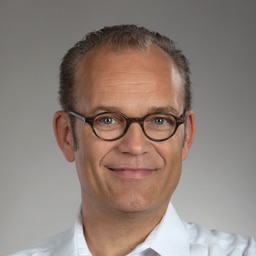
Dierk Soellner
Dierk Soellner’s vision is: ‘Empowering people and teams – with empathy and expertise’. As a certified business coach (dvct e.V.), he supports teams, specialists and managers in tackling current challenges through professional coaching. Combined with his many years of extensive specialist expertise in IT methodology frameworks, this makes him a competent and empathetic guide in the fields of personnel, team and organisational development. He also holds a teaching post on ‘Modern approaches to designing high-performing IT organisations’ at the NORDAKADEMIE in Hamburg and has published the specialist book IT-Service Management mit FitSM.
His clients range from DAX corporations to medium-sized companies to smaller IT service providers. He likes to tweet and regularly publishes expert articles in print and online media. Together with other experts, he founded the Value Stream initiative.
On the t2informatik Blog, we share knowledge and experience with people in organisations. We have been developing and modernising software for them since 2012. Pragmatically. ✔️ Personal. ✔️ Professional. ✔️ Get to know t2informatik as your development partner.