
How neutral does moderation really need to be?
‘Moderation must be neutral! Right? It sounds reasonable at first. But is neutrality even possible in moderation?’[1] Heiko Bartlog recently opened a post on LinkedIn with these words.
A good question.
Moderators are often expected to be neutral. But what does that actually mean? Are they supposed to have no opinion of their own, not to interfere, or to treat all participants equally? And is complete neutrality even possible?
At present, this question is particularly evident in the debate surrounding teachers. There is repeated debate over whether a requirement for neutrality applies to them and what such a requirement would mean in everyday life. In some cases, absolute neutrality is even demanded. But can a human being ever act completely neutrally?
In his post, Heiko Bartlog examines, amongst other things, the role of the President of the Bundestag and highlights an important point: ’. . . whoever moderates also helps to make decisions: Who is given the floor, and when? When is a discussion interrupted? Which statement is taken up? Which interjection is ignored? Every intervention alters the course of events. The absence of an intervention does so as well. Moderation is effective.’
He therefore concludes that neutrality may be the wrong expectation to place on moderators. After all, they are always part of the situation in which they are moderating.
This raises a fundamental question: Is neutrality a meaningful yardstick for good moderation, or are we demanding something that people simply cannot achieve?
This question concerns far more than just Presidents of the Bundestag or teachers. Project managers, mediators, journalists, professional moderators and executives also take on moderation tasks. Many of them have to moderate whilst simultaneously representing their own interests, shouldering responsibility or making decisions.
This is precisely why it is worth taking a closer look at the concept of neutrality, as it can mean very different things depending on the role and situation.
The dimensions of neutrality
Neutrality is not a clear-cut concept. Depending on the situation, it can mean different things. It is therefore worth distinguishing between different forms:
- Substantive neutrality means not taking a personal stance and not favouring any particular solution.
- Procedural neutrality means making rules transparent, adhering to them and ensuring the process is fair. No one is favoured or disadvantaged.
- Personal neutrality means not allowing one’s own opinion to influence the moderation and maintaining professional detachment even in difficult situations.
- Value neutrality means not applying ethical or moral standards when assessing a matter.
Which form of neutrality is important depends on the role in question. In many professional situations, process neutrality is significantly more important and realistic than complete neutrality regarding content.
- A President of the Bundestag naturally holds political views and belongs to a party. Whilst chairing a sitting, however, she must apply the rules of procedure impartially and treat all parliamentary groups fairly.
- The situation is similar for a team or department head chairing a meeting. If they ultimately have to make a decision themselves or take responsibility for one, they cannot be outcome-neutral. However, they can allow for differing opinions, ensure the process is fair and provide a clear rationale for their decision.
- External moderators find it easier to maintain neutrality regarding content, as they are usually neither part of the technical discussion nor the organisation. Nevertheless, they may and should ask critical questions, highlight contradictions and ensure that important perspectives are not overlooked.
- Public discussions also demonstrate that neutrality has its limits. Treating scientifically proven findings and unsubstantiated claims as equally valid would not constitute good moderation. A moderator’s role may therefore be to clarify the current state of knowledge whilst leaving room for differing political or social assessments.
- The same applies to teachers. For them, neutrality does not mean that they are not allowed to have a stance. They should present different positions in a balanced way and support pupils in forming their own opinions. At the same time, they are bound by their educational mandate and the democratic values enshrined in the Basic Law. They cannot, therefore, be value-neutral.
These examples alone demonstrate that good moderation does not require the same form of neutrality in every situation.
What is far more crucial is the role a person is currently playing, the responsibilities they bear and the mandate they have. A fair and transparent process remains a key benchmark in this regard.
However, this is precisely where another problem arises: many people constantly switch between different roles in their day-to-day working lives. With each role, the expectations regarding neutrality, responsibility and one’s own actions also change. This tension is particularly evident in the case of project managers. They moderate, contribute specialist knowledge, steer the project and must make decisions. A look at these different roles shows why the demand for complete neutrality quickly reaches its limits.
Moderation is just one of the roles of project leadership
Project leadership illustrates particularly clearly just how much the expectation of neutrality depends on the specific role. After all, project leadership is far more than just moderation. Depending on the situation, it switches between four roles:
- moderator
- subject matter expert
- project manager
- decision-maker
These roles often blend seamlessly into one another. This becomes particularly problematic when it is not clear to those involved which role the project manager is currently speaking in. Sometimes, even the project manager themselves is unaware of this.
As a moderator, they should steer the process without dictating the desired outcome. They ensure that all participants have their say, that important information is taken into account, and that the discussion remains objective. If she puts forward her own position, she should make this clear whilst remaining open to other arguments.
As a subject matter expert, a different approach is required. In this role, the project manager should contribute her knowledge and experience. Neutrality would actually be counterproductive here. A subject matter expert may and should take a stance, provided she can justify it on professional grounds.
As a project manager, she bears responsibility for objectives, deadlines, resources, quality and risks. She cannot, therefore, remain neutral with regard to outcomes. Nevertheless, she should treat interests and individuals fairly and make it clear which requirements and framework conditions influence her decisions.
Finally, as a decision-maker, the project manager must make decisions and take responsibility for their consequences. Here, too, neutrality with regard to outcomes is hardly possible. What is crucial, rather, is that the basis for a decision is transparent.
The challenge, therefore, does not lie in remaining neutral in every situation. It is far more important to understand one’s own role and to make it clear to others.
A facilitator should not manipulate the process; a subject matter expert should not withhold their knowledge; a project manager must not lose sight of the project objectives; and a decision-maker cannot pretend that they do not have to make a decision.
Particularly when dealing with difficult or conflict-laden issues, it can therefore be sensible to hand over the moderation temporarily. An external facilitator can provide support in such cases. [2]
A facilitator creates the framework that enables a group to arrive at good solutions and decisions on its own. Their role goes beyond traditional moderation. In addition to process, participation and time management, they focus more strongly on collaboration, thought processes, group dynamics and decision-making capacity. To this end, they use questions, methods and a carefully designed process framework.
In terms of content, a facilitator remains as neutral as possible and open to outcomes. However, they are not value-neutral. Their remit is to enable a fair process and to support the group in developing sound results themselves. This can be a great relief for a project manager, as it allows them to focus temporarily on their other roles.
The Scrum Master is also frequently equated with a project manager or a moderator, yet their role differs significantly from these. [3] Put simply, the Scrum Master is an expert in the Scrum framework and is responsible for ensuring that Scrum functions as a model for work and collaboration. They support the team in working as self-organised and effectively as possible, and in identifying or removing obstacles.
However, a Scrum Master is neither a traditional project manager nor a decision-maker. They bear no responsibility for the project budget or technical deliverables, nor are they a manager in the traditional sense. Their role is not merely to moderate meetings. They coach, ask questions and intervene when collaboration or the Scrum process is not working. This, too, demonstrates that complete neutrality is not the appropriate benchmark. A Scrum Master is not biased towards a particular technical solution or individual people. However, they do champion a functioning Scrum process and the principles underpinning it.
This makes it clear that neutrality, impartiality and fairness are not the same thing. To be able to assess professional conduct more accurately, it is therefore worth taking a closer look at these terms.
Dimensions of professional practice
The role of the Scrum Master is a good example of how ‘neutrality’ and ‘impartiality’ are not the same thing. Nor can terms
such as fairness, objectivity or impartiality simply be used interchangeably.
| Term | Brief definition |
| Neutrality | Not taking a position on the substance of the matter or siding with any one party. |
| Impartiality | Not favouring or disadvantaging any party; treating all parties involved equally. |
| Fairness | Treating the process and those involved fairly and appropriately – not necessarily the same thing. |
| Objectivity | Making judgements as independently as possible from personal preferences, sympathies or interests, based on transparent criteria. |
| Bipartisanship | Actively putting oneself in the position of all those involved and supporting each side in their cause, without permanently identifying with any one side. |
- be non-neutral in terms of content,
- impartial towards people,
- fair in their approach,
- objective in their assessment and
- bipartisan in their moderation.
This is not a contradiction.
Is bipartisanship the more appropriate benchmark for good moderation?
If neutrality is not always possible or appropriate, the next question arises: is bipartisanship the better benchmark for good moderation?
A good example is mediation. A mediator should not impose their own solution and should remain neutral with regard to the outcome. At the same time, they treat all parties to the conflict equally.
This is precisely where the difference lies: neutrality can mean not interfering with the substance of the matter. Bipartisanship goes one step further. It requires taking the interests, needs and perspectives of all those involved seriously and, at times, putting oneself in their shoes. In doing so, the moderator supports all sides without permanently identifying with any one of them.
This approach is particularly useful where people are mediating between differing interests or perspectives without wishing to decide the outcome themselves. This applies, for example, to mediators, coaches, supervisors, conflict counsellors, moderators or facilitators.
However, impartiality is not suitable for every role.
A project manager, for example, may prefer solution A and thus not be neutral in terms of content. Nevertheless, they can take the arguments for solution B seriously, evaluate both solutions against transparent criteria and give those involved appropriate opportunities to influence the outcome. In doing so, they act fairly and impartially without having to abandon their own position.
For project managers and senior managers, the expectation of complete bipartisanship can therefore quickly become excessive. They bear responsibility for objectives, outcomes and resources, and often have to make decisions themselves. In such cases, it is particularly important to make one’s own position clear whilst still giving fair consideration to other perspectives.
In other roles, however, greater detachment is required. Judges and arbitrators must apply rules and established standards equally to all parties involved. They must not, even temporarily, identify with one side, but should decide as objectively and impartially as possible. The same applies to the chairperson of a sitting in the Bundestag.
Thus, bipartisanship is not a universally applicable benchmark for good moderation.
Rather, professional conduct arises from an appropriate combination of impartiality, fairness, transparency and, depending on the role, objectivity or bipartisanship. Which approach is appropriate depends on the moderator’s remit and the responsibilities they bear.
This makes it clear once again: good moderation does not require as much neutrality as possible, but rather clarity about what form of professional conduct is required in the situation at hand.
When AI acts as a moderator
If neutrality, fairness and an awareness of one’s role are crucial for good moderation, an obvious question arises: could AI not be particularly well suited to this task? After all, it has no personal interests, no biases and no fear of unpleasant consequences.
In fact, various AI tools now offer functions that support traditional moderation tasks, particularly in online meetings.
| Tool | What the AI does during the meeting |
| Microsoft Teams Facilitator | Real-time notes, calendar and time tracking, reminders, action items and summaries |
| MeetingTango | Agenda preparation, time management, documentation of decisions and action items, reminders and follow-up |
| Fellow | AI-powered notes, decisions and action items, as well as support with meeting structure and roles |
| AgendaGenie | Dynamic agenda, real-time summary, action item tracking and follow-up |
| ClickUp | Meeting structure, roles, action items, tasks and follow-up in project management |
| Miro | Support with workshops, engagement, structuring and translating discussions into action |
| Workshop-AI | Support for facilitators and Scrum Masters with preparation, methodologies, live sessions, retrospectives and coaching |
- AI note-takers document what happens in the meeting and produce, for example, minutes or summaries.
- AI meeting assistants provide support with preparation and follow-up, such as with tasks, responsibilities or follow-ups.
- AI facilitators monitor the proceedings more closely and intervene in specific situations, for example with time management or outstanding tasks.
The first two groups in particular can already serve as helpful co-facilitators today. Things get interesting when an AI no longer merely documents or organises, but actively intervenes in the process. Microsoft’s Facilitator, for example, is developing in this direction. It can speak up via chat, identify unanswered questions or offer additional information.
It is precisely at this point that the question of neutrality becomes compelling once again.
As Heiko Bartlog put it at the start of this article: ‘Whoever facilitates helps to make decisions.’ This also applies to AI. As soon as it decides for itself when to intervene, it must assess situations:
- What is relevant right now?
- Who else should have their say?
- When is a discussion taking too long?
- Which question is still open?
- When should a topic be put back on the agenda?
- What decision was actually made?
- What is an action item?
- What question should be asked next?
These are not purely technical tasks. They are moderation decisions.
AI may appear neutral in this context because it does not pursue any personal interests. Nevertheless, it is not automatically value-neutral, impartial or fair. Training data, rules, prompts and algorithms influence what it recognises as good moderation and how it reacts.
Nor can process neutrality simply be programmed in. After all, what counts as a fair process depends on the specific context. A church council may apply different standards to good facilitation than an animal welfare organisation, a youth centre, an agile start-up, a scientific forum or a professional association.
Furthermore, good facilitation involves more than just structure, time management and the allocation of speaking time. People can perceive and contextualise situations that are difficult for AI to fully grasp. These include, amongst other things:
- perception and intuition
- contextualisation of changing situations
- empathy and a sense of justice
- building trust and psychological safety
- situational interventions
- deliberate shifts in perspective
- selection of suitable facilitation methods
- managing group dynamics
- perception of non-verbal communication
- dealing with resistance and strong emotions
- conflict management
- flexible adaptation of procedures and scheduling
- transparent justification of decisions
- assumption of responsibility
AI can therefore already provide valuable support for facilitation in many areas. However, the more it intervenes in the process itself, the less sufficient it is to focus solely on its technical capabilities. This raises the same questions as with human facilitation: According to which rules does it make decisions? What values underpin its decisions? And who ultimately bears responsibility?
Conclusion
The more responsibility a person bears for content, decisions and outcomes, the less meaningful the demand for complete neutrality becomes. Good moderation therefore does not mean not having a view of one’s own. What is crucial, rather, is to be aware of one’s own role, to ensure that one’s personal opinion is not unwittingly used as a benchmark, and to ensure that the process is conducted fairly and transparently.
The form of neutrality that is appropriate depends on the situation at hand. Sometimes neutrality in terms of content is important; at other times, impartiality, objectivity or a bipartisan approach is required. In other roles, having one’s own position is even expressly called for. The benchmark for professional moderation is therefore not the greatest possible neutrality. Fairness, transparency, responsibility and a conscious approach to one’s own role are more important.
Nor can values simply be ignored in this context. Respect, justice and democratic principles are what create the very framework within which a fair exchange becomes possible. Good moderation is therefore not value-neutral.
In short: Good moderation does not require as much neutrality as possible, but rather the appropriate attitude for the role in question.
This also applies to AI. It can structure and document meetings and take on moderation tasks. However, as soon as it intervenes in the process itself, it too makes decisions based on certain rules and values. AI can therefore provide useful support for human moderation, but cannot currently replace it entirely.
Notes:
Are you interested in the topics of leadership and leadership coaching? Then connect with Birgit Schiche on LinkedIn.
[1] Post by Heiko Bartlog on LinkedIn
[2] Facilitator – A multifaceted role and set of responsibilities
[3] Scrum Master – Responsible for implementing Scrum
Would you like to support Birgit Schiche and discuss the challenges of moderation? Then please share this post within your network or organisation.
Birgit Schiche has published three more articles on the t2informatik Blog:
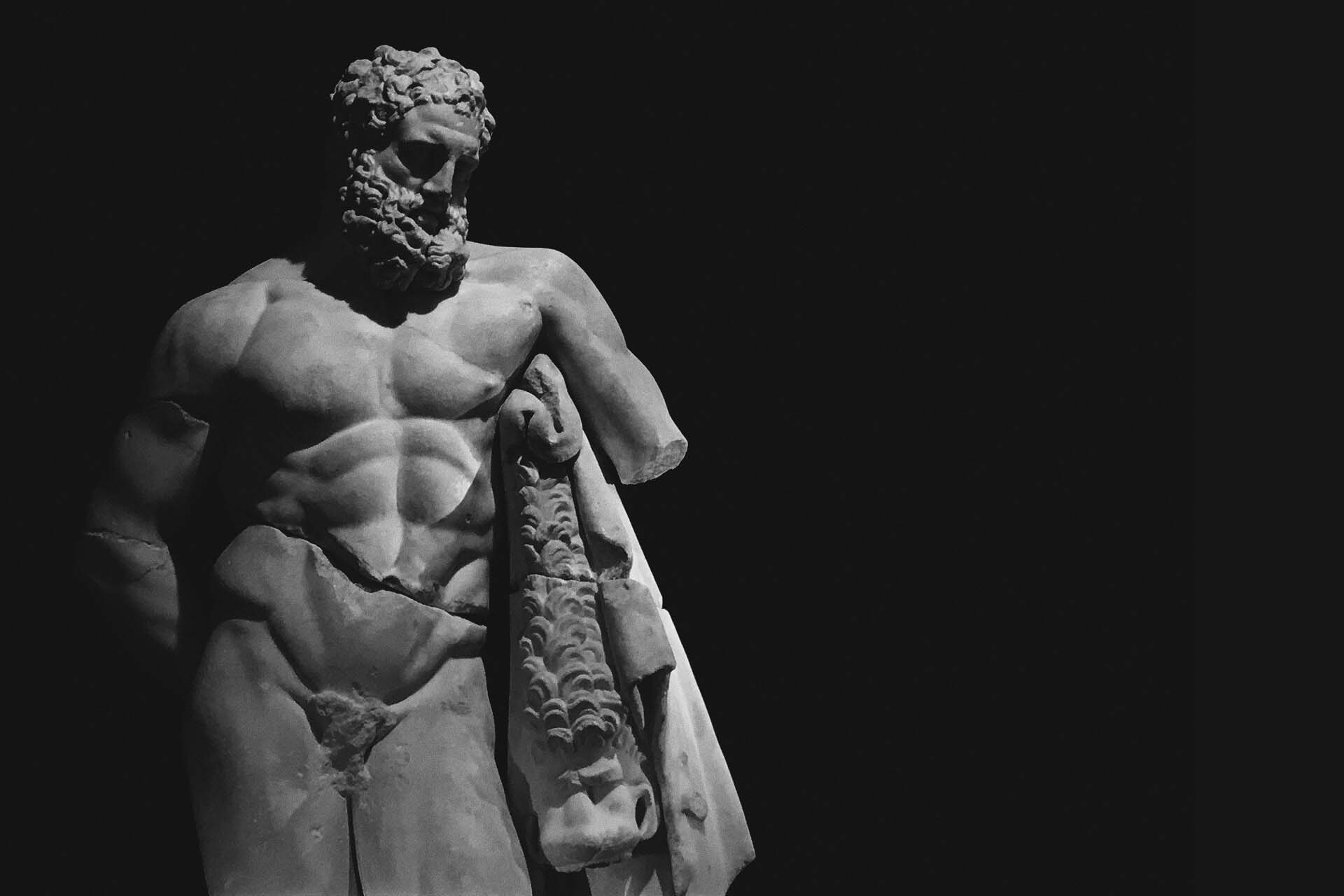
Diversity – Farewell to monoculture in companies

Promotion of women in companies

Liberating Structures – Freedom for better communication
Birgit Schiche
Birgit Schiche was a manager herself for a long time before she decided on a different career path. As a change management consultant at Daimler and later as a senior consultant at a Hamburg-based management consultancy, she began supporting organisations and managers in change processes. As a consultant and coach with “Plan B. Schiche – Personalstrategie & Führung”, she worked from 2010 as a pioneer for a new working world.
In the meantime, she has been doing this work part-time, while in her main job she is now strategically building up the Learning & Development department in a rapidly and also internationally growing company. Her principle: Even the smallest steps towards change are worthwhile – the main thing is to get things moving. Communication and an understanding of leadership are key factors.
On the t2informatik Blog, we share knowledge and experience with people in organisations. We have been developing and modernising software for them since 2012. Pragmatically. ✔️ Personal. ✔️ Professional. ✔️ Get to know t2informatik as your development partner.