
AI and responsibility
An imaginary conversation between Peter Drucker and Pope Leo XIV on responsibility in dealing with AI in organisations
This is the tenth and final instalment in a series of fictional conversations. In it, Peter Drucker meets well-known figures as well as ordinary people like you and me. People with different roles within organisations and different perspectives on artificial intelligence: ranging from technological optimism, through pragmatic application and historical warnings, to economic reality.
Today, he is in conversation with Pope Leo XIV, who invited him to the Vatican for a discussion shortly after the publication of his first encyclical, *Magnifica Humanitas*. The document marks an important moment for Catholic social teaching. The Pope wishes to share the ideas in the encyclical with a thinker who has devoted his life to leadership, responsibility and the value of the individual within organisations. This gives rise to an exchange between spiritual depth and practical management wisdom, demonstrating just how closely these two perspectives are intertwined.
A historical overview
Peter Drucker: Your Holiness, I have read your first encyclical, entitled ‘Magnifica Humanitas’, with great interest. The subtitle has really piqued my curiosity. Tell me a little about “The Protection of Humanity in the Age of Artificial Intelligence” and why you chose 15 May as the publication date. Isn’t that precisely the day on which Pope Leo XIII presented “Rerum Novarum” 135 years ago?
Pope Leo XIV: That was very important to me, Mr Drucker. Back then, the question was how human dignity could be preserved during the Industrial Revolution. Today, the same question arises in the age of artificial intelligence. And we, as a Christian institution, always have something to say on the matter.
Peter Drucker: So you are deliberately drawing a parallel between the labour issue of that time and the AI issue of today.
Pope Leo XIV: Exactly. In both cases, it is about power relations, exploitation and the question of whom technological progress ultimately really serves.
Peter Drucker: I have spent my whole life studying the transformation of work. What strikes me about your encyclical is the consistency with which you are continuing to write this story. You are not just talking about technology, but about human beings themselves.
Pope Leo XIV: The title ‘Magnifica Humanitas’ was chosen deliberately. It is about the greatness of humankind, which cannot be replaced by any machine.
Peter Drucker: For me, this greatness of humankind has always been at the heart of leadership. An organisation is only as good as the people who work within it.
Pope Leo XIV: And that is precisely why we must be particularly vigilant now. If we lose sight of human dignity, we lose the very core of every organisation.
Peter Drucker: When I think back to my own time, it was always the same experience. As soon as an organisation forgets what it is actually there for, it also loses its ability to make good decisions.
Pope Leo XIV: This applies just as much to businesses as it does to the Church. We must never stop remembering our true mission, even as new tools such as artificial intelligence emerge.
Peter Drucker: For me, that is precisely where the real challenge of our times lies. The tools are changing faster than ever before, but the fundamental questions – and indeed the answers – remain the same.
Pope Leo XIV: That is why it is worth looking back at history. Rerum Novarum has shown us that a clear moral stance can provide guidance even in turbulent times.
Power in the hands of a few
Peter Drucker: Your Holiness, one point in your encyclical particularly caught my attention: you speak of a new form of colonialism practised by a handful of technology conglomerates.
Pope Leo XIV: Yes, that is one of my greatest concerns. Today, a handful of companies control key elements of artificial intelligence. This creates a concentration of power the likes of which we have never seen before.
Peter Drucker: I warned against monopolies decades ago. Competition is necessary so that organisations are constantly forced to reinvent themselves. Without competition, every institution stagnates.
Pope Leo XIV: I see it exactly the same way. But with artificial intelligence, there is an additional dimension. It is not just about economic power, but about control over information, opinion and, ultimately, people’s thinking.
Peter Drucker: You speak of a colonisation of the mind. That is a striking statement.
Pope Leo XIV: You could call it that. When a handful of corporations determine what information we see and what answers we receive from a machine, power shifts in a way that can endanger democratic societies.
Peter Drucker: I agree with you wholeheartedly. What do you propose as a remedy?
Pope Leo XIV: Clear guidelines and effective controls. The use of AI must never serve the interests of individual companies alone, but must remain committed to the common good.
Peter Drucker: That reminds me of my own conviction that every organisation bears a social responsibility that extends beyond its own success.
Pope Leo XIV: It is precisely this responsibility that we must reclaim today, Mr Drucker.
Peter Drucker: I also find myself wondering what role smaller organisations can play in this context. Not everyone has the resources to set up their own controls.
Pope Leo XIV: That is true. That is why we need common standards that apply to everyone, not just the major players. Smaller organisations must not be left to shoulder this responsibility alone.
Peter Drucker: Perhaps this is precisely where an opportunity lies for alliances and networks that take on responsibility collectively, rather than leaving each organisation to struggle on its own.
Pope Leo XIV: A very valuable thought. Solidarity has always been a response to unequal power relations, and it remains so even in the age of artificial intelligence.
The question of disarmament
Peter Drucker: Your Holiness, another concept from your encyclical has been on my mind a great deal: you argue that artificial intelligence must be disarmed.
Pope Leo XIV: Yes, that is a key concern of mine. Decisions that are lethal or irreversible must never be placed in the hands of a machine.
Peter Drucker: That is a very clear boundary, and I doubt anyone would disagree with that, would they?
Pope Leo XIV: It must be clear. A machine cannot bear moral responsibility. If we nevertheless entrust it with decisions about life and death, we are relinquishing part of our humanity.
Peter Drucker: In my work, I have often said that leaders can never delegate responsibility, not even to systems or processes. Ultimately, it is always a human being who bears the responsibility.
Pope Leo XIV: That is a view I fully share. Responsibility cannot be outsourced, neither to an authority nor to a machine.
Peter Drucker: But how do we ensure that this boundary is actually upheld? The temptation to hand over decisions to efficient systems is great.
Pope Leo XIV: That is why we need international agreements and a clear legal framework. Good intentions on the part of individuals are not enough when economic or military pressure is high.
Peter Drucker: That sounds like a task that goes far beyond individual organisations.
Pope Leo XIV: That is precisely why I am speaking not only to the faithful of my Church, but to all people of good will.
Peter Drucker: I believe that leaders, in particular, must set a special example here. When they set clear boundaries within their own organisations, this has an impact far beyond the organisation itself.
Pope Leo XIV: I see it exactly the same way. Every single decision that prioritises humanity over mere efficiency is a small contribution to a broader culture of responsibility.
The chain of responsibility
Peter Drucker: Your Holiness, you also write that the use of AI is never a purely technical matter.
Pope Leo XIV: That is very important to me, Mr Drucker. When AI is integrated into processes that affect people’s lives, then everyone involved bears responsibility, from the developers right through to the users.
Peter Drucker: This chain of responsibility has always been crucial for me. A manager cannot hide behind a technology and say that the system made the decision.
Pope Leo XIV: Exactly. Responsibility does not end with the development of a technology. It extends throughout its entire use.
Peter Drucker: How do you envisage this distribution of responsibility in practice?
Pope Leo XIV: Every link in the chain must know its role. The developer bears responsibility for the design, the company for its deployment, and the individual user for its mindful use. No one can completely opt out.
Peter Drucker: That reminds me of my idea of the responsible leader. Leadership means taking responsibility for the consequences of one’s own actions, even when technology is involved.
Pope Leo XIV: And this responsibility can never be fully delegated to a system, no matter how advanced it is.
Peter Drucker: That presupposes that organisations empower their staff to actually shoulder this responsibility.
Pope Leo XIV: That is precisely the task of good leadership in our time. And if we’re honest, this isn’t just a recent development, is it?
Peter Drucker: I’m also thinking about the education of young people. If we don’t teach them to take responsibility, they will rely too readily on machines later on.
Pope Leo XIV: An important point. Education in the broadest sense, which also shapes the conscience, is the best foundation for a responsible approach to artificial intelligence.
What makes human beings irreplaceable
Peter Drucker: Your Holiness, your encyclical runs to 122 pages and is packed with content. There are a number of sentences and statements that immediately caught my eye. You warn against dehumanisation resulting from the misuse of digital technologies.
Pope Leo XIV: Yes, that is a very real danger. If we use technology incorrectly, we lose the abilities that define us as human beings.
Peter Drucker: Which abilities do you mean specifically?
Pope Leo XIV: The ability to engage in genuine interaction, to feel compassion, and to exercise moral judgement. A machine can process information, but it cannot love and it cannot have a conscience. Nor does it have consciousness.
Peter Drucker: In my work, I have always emphasised that creativity, judgement and interpersonal relationships are what make humans irreplaceable. A machine can deliver efficiency, but effectiveness in the true sense always requires a human being.
Pope Leo XIV: That strikes exactly at the heart of my concern. If we rely too heavily on the efficiency of machines, we run the risk of losing sight of the importance of human judgement.
Peter Drucker: In your view, how can organisations counteract this in today’s world?
Pope Leo XIV: By consciously creating spaces where people have time for genuine interaction. Technology should support these spaces, not replace them.
Peter Drucker: That reminds me of my own conviction that an organisation’s most important resource will always be people, not the technology they use.
Pope Leo XIV: And it is precisely this conviction that we must defend today with renewed clarity.
Peter Drucker: I observe in many organisations that people are increasingly allowing themselves to be guided by screens and systems, rather than listening to one another. I regard this as a silent but serious danger.
Pope Leo XIV: This silent danger also concerns me greatly. People need genuine relationships in order to grow, and no technology, however sophisticated, can replace these relationships.
Peter Drucker: Perhaps that is the most important task for the coming years: consciously safeguarding spaces for genuine human interaction, even if it would seemingly be more efficient to leave everything to technology.
Pope Leo XIV: I wholeheartedly agree with that. Efficiency alone has never been a measure of a good life, neither for the individual nor for an organisation.
Looking ahead
Peter Drucker: Your Holiness, this has been a moving conversation. I feel honoured to be able to exchange views with you in this way. When you look to the future, what role should artificial intelligence play in our organisations?
Pope Leo XIV: It should serve the common good, not just economic interests. That is the central guiding principle I describe in my encyclical.
Peter Drucker: That ties in with the question I’ve always asked every leader: What is our organisation actually here for? If the answer is merely profit, it will ultimately fail.
Pope Leo XIV: That is precisely my hope. That organisations ask themselves how they can use technology to better serve their true purpose, rather than allowing themselves to be driven by technology.
Peter Drucker: So you are talking about consciously shaping the future, not passively adapting to technological developments.
Pope Leo XIV: Yes, exactly. The future of artificial intelligence does not lie in the hands of machines, but in our own decisions.
Peter Drucker: When I look back on my life’s work, that was precisely my deepest conviction. The future does not arise by chance, but through the conscious decisions of courageous people.
Pope Leo XIV: And these decisions require not only wisdom, but also humility. We must never forget that we are stewards of a creation that is greater than ourselves.
Peter Drucker: This humility is often lacking in the business world, where success is quickly confused with control. Your words remind me that true greatness lies in responsibility, not in power.
Pope Leo XIV: That is precisely the message I wish to convey through *Magnifica Humanitas*. Human greatness is not demonstrated by control over machines, but by care for one’s neighbour.
Peter Drucker: Thank you for this conversation, Your Holiness. Your encyclical impressively combines spiritual depth with practical wisdom for organisations.
Pope Leo XIV: And I thank you, Mr Drucker. Your thoughts on leadership and responsibility bear a striking resemblance to what I experience every day in my office. Ultimately, it is always about people, no matter what tools we provide them with.
Peter Drucker: I can only agree. The greatest task of any leadership remains to empower people, not to perfect machines.
Pope Leo XIV: May this thought guide all those who bear responsibility today, in business as well as in the Church and in every community of people of good will.
Notes:
This fictional conversation, too, builds on the theoretical foundations described by Dierk Söllner in the first article of this series – Peter Drucker meets AI. Among other things, that article explores the true value of knowledge work.
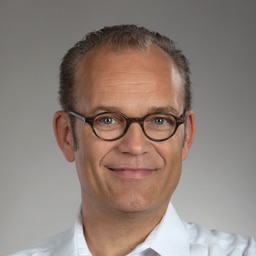
Dierk Söllner supports specialists and managers in tackling current challenges through professional coaching and offers useful training courses on AI.
Peter Drucker and Pope Leo XIV view artificial intelligence from two different perspectives: Drucker focuses on effectiveness and responsibility, whilst the Pope emphasises dignity and humanity. Ultimately, they are united by a single idea: technology must serve humanity and must not reduce people to mere objects that can be calculated, optimised or automated.
This article concludes the series of discussions centred on Peter Drucker and artificial intelligence. In the discussions so far, he has examined the topic from a wide range of perspectives: with marketing manager Anna, Sam Altman, founder Marc, Yuval Noah Harari, physician Dr Rashid, Satya Nadella, Prof. Dr Juliane Weber,
Frederick Winslow Taylor and, most recently, Pope Leo XIV. The discussions have centred on work and identity, customer value and responsibility, human autonomy, medicine, education, effectiveness, efficiency and humanity. However diverse the topics and interviewees may be, one question runs through the entire series: What are we using artificial intelligence for? Technology creates opportunities. Whether this leads to progress depends on whether it serves people, delivers genuine benefits and leaves room for thought, decision-making and responsible action.
Would you like to support Dierk Söllner or discuss artificial intelligence and responsibility? Then please share this post within your network or your organisation.
On the t2informatik blog, you’ll find more imaginary conversations with Peter Drucker, including:
AI and the question of effective work
Ai and education: Why we’re testing the wrong things
The spirit of efficiency
Dierk Soellner
Dierk Söllner’s vision is: “Strengthening people and teams – empathically and competently”. As a certified business coach (dvct e.V.), he supports teams as well as specialists and managers with current challenges through professional coaching. Combined with his many years of comprehensive technical expertise in IT methodological frameworks, this makes him a competent and empathetic companion for personnel, team and organisational development. He runs the podcast “Business Akupunktur“,has a teaching assignment on “Modern design options for high-performance IT organisations” at NORDAKADEMIE Hamburg and has published the reference book “IT-Service Management mit FitSM“.
His clients range from DAX corporations to medium-sized companies to smaller IT service providers. He likes to tweet and regularly publishes expert articles in print and online media. Together with other experts, he founded the Value Stream initiative.
In the t2informatik Blog, we publish articles for people in organisations. For these people, we develop and modernise software. Pragmatic. ✔️ Personal. ✔️ Professional. ✔️ Click here to find out more.