
The spirit of efficiency
An imaginary conversation between Peter Drucker and Frederick Winslow Taylor, the founder of Taylorism
This is the ninth instalment in a series of fictional conversations. In it, Peter Drucker meets well-known figures and ordinary people like you and me. People with different roles within organisations who embody technological optimism, pragmatic application, historical caution and economic reality.
Today, he is talking to Frederick Winslow Taylor, the founder of scientific management, sometimes referred to simply as ‘Taylorism’. The two are debating digital Taylorism and the question of whether artificial intelligence turns people into robots or liberates them from them. Peter Drucker initiated the conversation because he finds Taylor’s statements and views very interesting in the context of artificial intelligence. He values Taylor’s perspective, even if he does not always agree with him. He is aware that both have created groundbreaking works and models which are still applied today and answer many questions regarding the use of AI.
Taylor’s work seems complete: AI as the perfect machine
Frederick Taylor: Mr Drucker, you must imagine what this Artificial Intelligence really means. I have spent my life measuring movements and timing tasks. Now there is a machine that does this for every single step of the process in real time. This is the culmination of my work.
Peter Drucker: Your enthusiasm does not surprise me, Frederick. But let’s ask ourselves what the purpose of this measurement actually is. Efficiency alone is not an end in itself.
Frederick Taylor: You’re mistaken, Peter. Efficiency is the foundation of everything. If I find the optimal way to complete a task, prosperity increases for everyone involved. That was my conviction even back when it came to shovelling coal, and it applies today to every digital process.
Peter Drucker: Your coal shovel was a physical task with a clear, correct way of doing it. But most people today no longer shovel coal. They think, they analyse, they decide. That is a completely different kind of work.
Federick Taylor: I understand the objection, but I don’t see any contradiction. Thinking, too, consists of steps. An analyst collects data, checks sources, draws conclusions and formulates a result. Each of these steps can be measured and optimised. Why should mental work be exempt from this logic?
Peter Drucker: Because the most valuable part of this work lies not in the individual steps, but in the connection between them. A good analyst sometimes recognises a pattern that no system could have foreseen. You cannot force this moment of insight into a formula.
Federick Taylor: But it is precisely such moments that a machine learning system can now simulate, if not surpass. It recognises patterns in millions of data records that no human could ever survey. And it does so in a matter of seconds.
Peter Drucker: Recognising patterns is not the same as understanding meaning. A machine can determine that two events frequently occur together. But it cannot explain why this connection is important for a particular customer in a particular situation. Nor can it explain the fundamental significance for people.
The stopwatch is now inside the computer
Frederick Taylor: But that is precisely where the progress lies. I used to need an observer with a stopwatch. Today, the algorithm monitors every keystroke, every email, every minute spent in front of the screen. The transparency is absolute.
Peter Drucker: And that is precisely what frightens me. This constant monitoring is now known as digital Taylorism. People are trying to standardise creative and administrative tasks in the same way that you once standardised factory work. A programmer who is constantly aware that every one of his breaks is being measured will not become more creative. He will become more anxious.
Frederick Taylor: Fear breeds discipline, Peter. That helps in so many situations within business organisations.
Peter Drucker: Please don’t take this the wrong way, Frederick. I can’t let that stand; it’s not true. Fear breeds resistance. Knowledge workers won’t allow themselves to be treated like machine parts. They own their knowledge themselves. They can take it with them at any time if they leave the company. That is the fundamental difference compared to your factory worker from 1911.
Frederick Taylor: So you’re saying that control over the process doesn’t work the same way for knowledge work as it does for manual labour?
Peter Drucker: That’s exactly what I mean. A surgeon won’t be told how many seconds she needs to make an incision. A strategist won’t be told in what order to organise her thoughts.
Frederick Taylor: Nevertheless, in many companies today I observe exactly the opposite of what you describe. Managers request software that precisely logs how many lines of code a developer writes per hour or how many customer calls a sales representative makes per day. I don’t call this practice fear; I call it accountability to investors. Some also refer to it as ‘alignment’.
Peter Drucker: Accountability to investors is important, but it must not be confused with control. If a company treats its best people as if they were suspects, it loses precisely the people it needs most urgently. I observed this decades ago. The most talented employees are the first to leave a company that does not trust them.
Frederick Taylor: But without control, how do you ensure that the work gets done at all?
Peter Drucker: Through clear objectives and trust in the outcome, not by monitoring the process. A manager should ask what has been achieved by the end of the week, not how many minutes someone has spent sitting at their computer screen.
What is the alternative: efficiency versus effectiveness
Frederick Taylor: Then tell me, Peter, what is your alternative? If we don’t measure and standardise, how are we supposed to improve?
Peter Drucker: My alternative is effectiveness rather than efficiency. You want to do things right. I want to do the right things. An algorithm can produce an incorrect report in seconds rather than hours. But an incorrect report remains an incorrect report, no matter how quickly it is produced.
Frederick Taylor: But speed itself has value, doesn’t it? If we can work ten times faster, we gain ten times more time for other tasks.
Peter Drucker: Only if that time is used wisely. Otherwise, we simply fill the time we’ve gained with even more pointless reports. The management of the future must first ask which result actually matters before asking how to get there more quickly.
Frederick Taylor: So you prioritise the purpose over the method.
Peter Drucker: Always. An organisation that does the wrong thing very efficiently ruins itself faster than an organisation that does the right thing slowly.
Frederick Taylor: To me, that almost sounds like an excuse for inefficiency. In my experience, the purpose is often obvious. A customer wants to receive a product quickly and cheaply. The method is then the only open question.
Peter Drucker: That may be true for simple products. But most valuable decisions in a modern company aren’t so clear-cut. Which product should be developed in the first place? Which customers do we really want to serve? These questions cannot be answered with a stopwatch.
Frederick Taylor: Perhaps not with a stopwatch, but perhaps with artificial intelligence that analyses millions of market trends simultaneously.
Peter Drucker: The machine can tell you what has worked in the past. However, it cannot tell you what the customer will need in five years’ time, when the world will have already changed. For that, you need judgement, not just data. You need a range of skills that only humans possess.
The machine should bear the burden
Frederick Taylor: I admit there is one area where we might agree. Repetitive tasks, reports, calculations – the machine could take all of that on entirely.
Peter Drucker: This is precisely where the real opportunity for artificial intelligence lies. When the machine takes over the routine tasks, space is finally created for what really matters. I said decades ago that knowledge workers must manage themselves, and that includes weeding out unnecessary work.
Frederick Taylor: You call that ‘organised abandonment’, don’t you?
Peter Drucker: Exactly. You have to ask yourself regularly whether you would even start a particular task if you had to decide all over again today. Artificial intelligence can help us with this by taking over routine tasks entirely, thereby giving us back the time to make real decisions.
Frederick Taylor: Then we agree that the machine should bear the burden of repetition.
Peter Drucker: Yes, but with one crucial difference from your vision. In your view, people were ultimately supposed to become as efficient as the machine. In my view, the machine should take on so much that people can be human again.
Frederick Taylor: That’s an interesting reversal of my thinking. I wanted to adapt people to the machine. You want the machine to serve people.
Peter Drucker: That is precisely the crucial difference between our eras. In your day, machines were scarce and expensive, whilst people were cheap and replaceable. Today, it’s the other way round. Computing power is becoming cheaper, but genuine judgement remains in short supply. That is why organisations today must focus on people as the scarce resource, not on machines.
Frederick Taylor: A remarkable thought. If the machine is no longer the scarce resource, my entire logic of standardisation loses its original justification.
People in the role of creators
Frederick Taylor: But Peter, if machines take over routine tasks and, at some point, are even better at carrying out complex analyses than any human being, why do we still need people in business at all?
Peter Drucker: Because a machine cannot bear responsibility. It cannot make moral decisions. It cannot understand a customer who wants something they themselves cannot yet put into words. It cannot develop a vision for a company’s future. It simply has no consciousness.
Frederick Taylor: But surely the machine can recognise patterns that go far beyond human capability.
Peter Drucker: Recognise patterns, yes. Create meaning, no. A knowledge worker defines her own tasks and outcomes. No machine can do that for her, no matter how powerful it is. People remain the creators. The machine remains the tool.
Frederick Taylor: So you’re not afraid that people will become redundant?
Peter Drucker: I fear something else. I fear that managers will use machines to treat people like machines. That would be the real step backwards. It is not the technology itself that is the problem, but the mindset with which it is used.
Frederick Taylor: I’m slowly beginning to see the merit in your thinking. Could you explain that in more detail? What exactly do you mean by this mindset?
Peter Drucker: A manager with a Taylorist mindset first asks how he can make a person more efficient. A manager with the mindset I advocate first asks how he can help a person recognise their own contribution. The difference sounds small, but it changes everything. In the first case, the person becomes the object of optimisation. In the second case, they remain the subject of their own work.
Frederick Taylor: So the danger does not lie in artificial intelligence itself, but in the attitude with which it is used within organisations.
Peter Drucker: Exactly. The same technology can, in the hands of one manager, liberate people, and in the hands of another manager, disempower them. The machine does not make any of these decisions. The person at the top makes them.
A tool for liberation
Frederick Taylor: I must admit, Peter, my principles were developed for a world of manual labour. A knowledge worker cannot be optimised in the same way as a factory worker with a stopwatch. I realise that now.
Peter Drucker: And I must admit that there is a grain of truth in your love of precision. Algorithms can be a blessing if used correctly. They can free us from the burden of routine and give us time to think.
Frederick Taylor: That leaves the crucial question: does artificial intelligence turn people into robots, or does it free them from a robotic existence?
Peter Drucker: The answer does not depend on the technology. It depends on leadership. Those who use artificial intelligence to monitor and standardise people are creating digital Taylorism in its worst form. Those who use it to eliminate routine and strengthen autonomy are laying the foundations for genuine knowledge work.
Frederick Taylor: A tool for liberation, then, never an instrument of oppression.
Peter Drucker: Exactly. The machine should free people from routine so that they can do what only they can do: think, decide, take responsibility.
Frederick Taylor: I think we’ve established something important today. My principles were right for their time, but they need a new interpretation today. Perhaps the real task of management is no longer to optimise people like machines, but to use machines in such a way that people can finally become what they’ve always wanted to be.
Peter Drucker: That’s a fine summary, Frederick. And perhaps the most important lesson for any organisation introducing artificial intelligence today. The technology provides the tools. The purpose, the responsibility and the humanity remain solely in our hands.
Notes (some links in German):
This fictional conversation builds on the theoretical foundations described by Dierk Söllner in the first article of this series – Peter Drucker meets AI. Among other things, it explores the true value of knowledge work.
Dierk Söllner supports specialists and managers in tackling current challenges through professional coaching and offers useful training courses on AI.
Taylorism refers to the principle, established by the American Frederick Winslow Taylor (1856–1915), of process control in work procedures, which are prescribed in detail by a management system based on work studies and work planning. In the current debate, it is often assumed that advancing digitalisation affects all workers in the same way. Particularly with regard to autonomy at work and changing standards of work quality, some have posited the emergence of a form of digital Taylorism.
In this conversation, Frederick Taylor and Peter Drucker present two perspectives on artificial intelligence. Taylor sees the pinnacle of efficiency, whilst Drucker sees an opportunity to free oneself from routine. In the end, they agree: it is not technology, but leadership that determines whether humans become robots or remain free.
In the tenth and final instalment of this series, Peter Drucker leaves the world of management behind and encounters a completely different authority. He speaks with Pope Leo XIV about meaning, responsibility and the limits of artificial intelligence. Whilst Taylor celebrated the machine and Drucker defended it as a tool of liberation, this conversation brings a new question to the fore: what does dignity mean in an age where algorithms are influencing more and more decisions?
Drucker always brought the perspective of organisation and effectiveness to the discussion. The Pope complements this view with a spiritual and moral dimension. He set this out in his first encyclical, entitled ‘Magnifica Humanitas’, with the subtitle ‘On the Protection of the Human Person in the Age of Artificial Intelligence’.
It is no longer just about productivity or autonomy, but about the question of the human being as a whole. Can technology serve humanity without diminishing the human spirit? This conversation brings the entire series to a close. It combines Drucker’s pragmatic management theory with a deeper ethical reflection. Readers can therefore expect a shift in perspective that places the previous topics of business and leadership within a broader human context.
Would you like to support Dierk Soellner or discuss AI, efficiency and digital Taylorism? Then please share this post within your network.
Dierk Soellner has published more articles featuring Peter Drucker on the t2informatik blog, including:
Machines calculate, people heal
AI and the question of effective work
Ai and education: Why we’re testing the wrong things
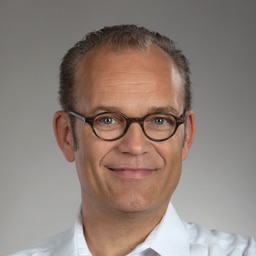
Dierk Soellner
Dierk Soellner’s vision is: ‘Empowering people and teams – with empathy and expertise’. As a certified business coach (dvct e.V.), he supports teams, specialists and managers in tackling current challenges through professional coaching. Combined with his many years of extensive specialist expertise in IT methodology frameworks, this makes him a competent and empathetic guide in the fields of personnel, team and organisational development. He also holds a teaching post on ‘Modern approaches to designing high-performing IT organisations’ at the NORDAKADEMIE in Hamburg and has published the specialist book IT-Service Management mit FitSM.
His clients range from DAX corporations to medium-sized companies to smaller IT service providers. He likes to tweet and regularly publishes expert articles in print and online media. Together with other experts, he founded the Value Stream initiative.
On the t2informatik Blog, we share knowledge and experience with people in organisations. We have been developing and modernising software for them since 2012. Pragmatically. ✔️ Personal. ✔️ Professional. ✔️ Get to know t2informatik as your development partner.