
AI and the question of effective work
An imaginary conversation between Peter Drucker and Satya Nadella, CEO of Microsoft, on AI, effectiveness and scope for genuine value creation
This is the seventh instalment in a series of fictional conversations. In it, Peter Drucker meets well-known figures and ordinary people like you and me – people in various roles within organisations who embody technological optimism, pragmatic application, historical caution and economic reality. Today, he is talking to Satya Nadella, the CEO of Microsoft.
Satya Nadella’s office in Redmond is bright and furnished in a thoroughly functional style. Books on cultural change and leadership line the shelves. Large pictures featuring simple drawings reinforce this impression. No superfluous status symbols distract the eye. A round wooden table in the centre is set up for open discussions. Everything in this room seems geared towards clarity and focus. It is unmistakably the study of a pragmatic doer.
The practitioner of the AI era
Peter Drucker: Mr Nadella, many people see you as an architect of the new AI era. I see something else first and foremost: I see a manager leading a very large organisation through a profound transformation. You don’t just talk about technology; you talk about work, responsibility and productivity. In this respect, you already stand out from many other voices commenting on AI.
Satya Nadella: Thank you very much, Mr Drucker. I have never seen myself as a prophet. I am interested in the question of how technology becomes useful in everyday life. When we at Microsoft talk about Copilot, we mean a tool designed to empower people in their work and increase productivity in day-to-day processes.
Peter Drucker: I fully agree with that. That is precisely where the real management question begins. A new technology, in and of itself, does not constitute progress. Progress only becomes apparent when a person’s work becomes clearer, more effective and more accountable. Otherwise, all that remains is enthusiasm for the machine.
Satya Nadella: You’ve put that very well. The mere availability of AI is not enough. People need to understand what they’re using the tool for and how to recognise whether it’s actually helping them. Otherwise, the speed of work may increase, but not its quality. That statement should sound familiar to you, shouldn’t it?
Peter Drucker: That’s right, that’s an important point. Managers very often confuse speed with performance. If a system produces ten drafts in a few seconds, that’s no proof of better results. It may just as well mean that an organisation is producing even more material that nobody really needs.
Satya Nadella: That’s why we try not to sell AI as a gimmick. It needs to be embedded in email, documents, meetings, analysis and collaboration in such a way that people spend less time on routine tasks and gain more time for thinking, decision-making and coordination.
From tools to effectiveness
Peter Drucker: That is a key point. I have always insisted that effectiveness is more important than mere efficiency. The saying is an old one, but it remains true: it is pointless to do something very efficiently that ought not to be done at all.
Satya Nadella: I agree. That is precisely why the real task is not just automation. The real task is selection. We need to recognise which activities are meaningful and which only persist because they have become entrenched in organisations over the years.
Peter Drucker: Let’s get very specific, then. When Microsoft Copilot writes summaries, prepares reports and handles communication tasks, it saves time. But how do you prevent that saved time from being immediately filled up again with new reports, new coordination tasks and new texts?
Satya Nadella: That risk is real. That is why every organisation needs clear principles. The tool must contribute to results. It must not create new work. When people use AI to create better project overviews, identify risks earlier and manage their time more consciously, then the tool becomes effective. I also describe such use cases for my own day-to-day work with Copilot.
Peter Drucker: I can agree with that, with one small reservation. A tool demonstrates its quality not in the best-case scenario, but in normal, everyday use. So I would ask: does the knowledge worker become freer, or are they simply being pushed to work at an ever-faster pace? Do they have to deal with less trivial tasks, or do they become the custodian of an even greater volume of material?
Satya Nadella: That’s a valid question. Many people today feel overwhelmed by a flood of information. If AI is used well, it can organise information and direct attention to what really matters. If it is used poorly, it accelerates precisely the very chaos it was supposed to reduce.
Peter Drucker: Then we are in complete agreement on one point: the problem is never just the technology. The problem is always also the organisation into which this technology is introduced. A poor organisation does not automatically become good simply because of a good tool.
Growth mindset in a large corporation
Satya Nadella: That is precisely why I place such strong emphasis on the growth mindset at Microsoft. For me, a learning organisation is the prerequisite for being able to use new tools responsibly and boldly. Here at Microsoft, we describe this way of thinking as a defining part of our cultural transformation.
Peter Drucker: That makes sense. Learning is not an add-on. Learning is at the heart of knowledge work. But I’d like to probe a little further: in large organisations, there are powerful forces that promote stability. There are routines, reporting lines, safeguards and a fear of making mistakes. How do you foster genuine learning within such a system?
Satya Nadella: Not through slogans. Only through leadership. Managers must make it clear that asking questions is allowed, that mistakes are not automatically penalised, and that collaboration is valued more highly than simply being right. Without this cultural foundation, AI remains a foreign element.
Peter Drucker: That convinces me. A large corporation does not learn by offering seminars. It learns by setting its standards differently. When people experience that curiosity, adaptability and collaborative learning are genuinely valued, then the organisation truly changes.
Satya Nadella: That is exactly the point. AI requires not only new skills; it also demands a different mindset. Those who think only of existing processes will see the machine primarily as a tool for acceleration. Those who, on the other hand, are open to learning will also recognise the opportunity to redesign work.
Peter Drucker: And in my view, this distinction is also crucial. An organisation can use the same technology either to cement old routines or to create new possibilities. The outcome does not depend on the code alone. It depends on values, leadership and decisions.
Now we come to a tricky question. When AI aggregates data, prepares texts, assesses risks and sorts through options, the very fabric of decision-making changes. Who, in reality, is still making the decisions?
Satya Nadella: People must make the decisions. For me, AI remains a co-pilot. It supports, it structures, it makes suggestions. But the responsibility for judgement and the consequences remains with people. This understanding also underpins the idea of positioning the co-pilot as an assistant in the work process.
Peter Drucker: In principle, I would agree with you, but I see a risk: people tend to grant complex systems a tacit bonus of authority. When a system presents an analysis with a high degree of certainty, many managers follow this recommendation, even if their own judgement raises doubts.
Satya Nadella: That’s true. That’s why the AI era needs more judgement, not less. Managers must learn to work with the machine’s suggestions without surrendering to it. They must ask questions, scrutinise assumptions and recognise limitations.
Peter Drucker: That sounds very good. So AI is changing the role of the manager. He is no longer merely the one who gathers information. He is increasingly becoming an interpreter, a prioritiser and a responsible decision-maker, against a backdrop of extensive preparatory work carried out by machines.
Satya Nadella: I couldn’t agree more, Mr Drucker. Perhaps that will be the most significant shift of all. Some of the operational groundwork can be handed over to systems. But responsibility for direction, purpose and consequences cannot be delegated. This is particularly true in large organisations, where decisions affect many people.
People at the centre or within the system
Peter Drucker: This leads to another conclusion: the hierarchy itself will change. As knowledge becomes more readily available, some intermediate levels will lose their former function. At the same time, those people who can demonstrate sound judgement, an understanding of context and the ability to inspire trust will gain influence. So it is the people who cultivate and master these quintessentially human qualities who will come out on top, isn’t it?
Satya Nadella: That’s exactly right. I deliberately talk about empowering people. For me, technology must enhance people’s capabilities. It should help them to work more independently, more clearly and more productively. Microsoft explicitly describes Copilot as a means of boosting productivity, creativity and everyday knowledge work.
Peter Drucker: I can very much see where you’re coming from. But I insist on a rigorous examination. Not every form of support actually empowers. Sometimes a system makes people more complacent. Sometimes it makes them more dependent. And sometimes it merely shifts control.
Satya Nadella: That’s why implementation is more important than marketing. People need training, guidance and a clear understanding of how to use it effectively. Practical examples relating to Copilot also emphasise that training and support are necessary so that teams can use the technology effectively and actually reduce repetitive tasks.
Peter Drucker: That makes sense, even though I often observe something quite different in companies at the moment. I once described the computer in very matter-of-fact terms. It can only handle quantifiable data. That is its strength and, at the same time, its limitation. Precisely for this reason, an organisation must never forget that judgement, meaning, responsibility and relationships do not simply follow from data.
Satya Nadella: You’re quite right. Machines can recognise patterns, and AI can do so at breakneck speed. It can make suggestions. But it knows neither dignity nor purpose, and it has no consciousness. These dimensions must be brought in by people. That’s why, for me, the debate about AI is always also a debate about leadership.
Peter Drucker: This is precisely where the real test lies. A good organisation uses technology without turning people into appendages of the system. A poor organisation adapts people to the system. Then, very quickly, assistance turns into mere clockwork.
I’d like to conclude with an old but uncomfortable management question: what must a company give up if it truly wants to harness the benefits of AI? Not add to it. Truly give it up.
Satya Nadella: Unfortunately, this question is often overlooked, and I also consider it important. I would say that companies must give up the illusion that every activity from yesterday will still be meaningful tomorrow. They must stop evaluating work based on visibility, presence or mere volume of output.
Peter Drucker: Quite right. And I would add: they must give up processes that survive solely because they were once useful. I call this ‘Organised Abandonment’, and it lies at the heart of good leadership. For me, these ideas describe the systematic review of products, processes and markets to assess whether they are still justified.
Satya Nadella: This is central to the AI debate. If new systems are simply layered on top of old bureaucracy, the burden only grows. If, on the other hand, you consciously cut back, simplify and reorganise responsibilities, then space is created for genuine value creation.
Peter Drucker: That was a very pleasant and harmonious conversation, and I also like your final point. So the final question is not: ‘What else can AI do?’ The final question is: ‘Which work is still even worthy of our attention?’ Only when this question is answered honestly can technology become a productive force.
Satya Nadella: I enjoyed the conversation too. I feel validated and am delighted that my reading of your books has fallen on fertile ground.
Notes:
This fictional conversation builds on the theoretical foundations described by Dierk Söllner in the first article of this series – Peter Drucker meets AI. Among other things, it explores the true value of knowledge work.
Dierk Soellner supports specialists and managers in tackling current challenges through professional coaching and offers useful training courses on AI.
The Global Peter Drucker Forum is an international management conference dedicated to Peter Drucker’s management philosophy.
If you compare this imaginary conversation between Peter Drucker and Satya Nadella with the dialogue between Drucker and Sam Altman, the CEO of OpenAI, one difference is very clear: whilst Altman focuses more on the technical possibilities and the horizons of what may be conceivable in the future, Nadella centres his attention on how these possibilities are put to the test in day-to-day organisational life.
This makes it easy to distinguish between the two perspectives. One represents the dawn of technology, the other its practical application within organisations, teams and work processes. For managers in particular, this second perspective is often the more challenging and important one, because the value of AI is not measured solely by its impressive presentation, but by whether it enables people to work more effectively, make more informed decisions and achieve greater impact within their organisations.
In the next fictional conversation, Peter Drucker speaks with Professor Weber about education, judgement and the question of what a person still needs to be able to do for themselves when AI can apparently write any essay. One thing is already certain: the discussion will be controversial.
Would you, as an influencer or opinion leader, like to discuss AI and effectiveness? Then please share this post within your network.
Dierk Soellner has published more posts featuring Peter Drucker on the t2informatik Blog, including:
Solution seeks problem
The future of human autonomy
Machines calculate, people heal
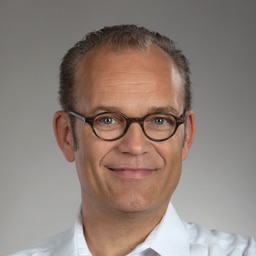
Dierk Soellner
Dierk Soellner’s vision is: ‘Empowering people and teams – with empathy and expertise’. As a certified business coach (dvct e.V.), he supports teams, specialists and managers in tackling current challenges through professional coaching. Combined with his many years of extensive specialist expertise in IT methodology frameworks, this makes him a competent and empathetic guide in the fields of personnel, team and organisational development. He also holds a teaching post on ‘Modern approaches to designing high-performing IT organisations’ at the NORDAKADEMIE in Hamburg and has published the specialist book IT-Service Management mit FitSM.
His clients range from DAX corporations to medium-sized companies to smaller IT service providers. He likes to tweet and regularly publishes expert articles in print and online media. Together with other experts, he founded the Value Stream initiative.
On the t2informatik Blog, we share knowledge and experience with people in organisations. We have been developing and modernising software for them since 2012. Pragmatically. ✔️ Personal. ✔️ Professional. ✔️ Get to know t2informatik as your development partner.