
What is the A.M. Turing Award?
Table of Contents: Definition – Who was A.M. Turing? – Winners 2024 – List of Winners – Statistical evaluations – Notes
Smartpedia: The Turing Award is the highest award in the field of computer science and is comparable to the Nobel Prize or the Fields Medal.
Turing Award – the highest award in computer science
The A.M. Turing Award is the highest award in computer science. Since 1966, it has been awarded once a year to individuals whose work has outstanding significance for computer science.
The Turing Award, which is comparable to the Nobel Prize or the Fields Medal for mathematics and is nowadays sponsored by Google and endowed with 1 million US dollars, is awarded by the Association for Computing Machinery (ACM). It was founded in 1947 as a scientific society for computer science with the aim of promoting the science and application of information technology.
According to its own information, the ACM is active in more than 100 countries with approx. 78,000 members. The German section is the German Chapter of the ACM, which celebrated its 50th anniversary in 2018.
Who was Alan Mathison Turing?
The award is named after Alan Mathison Turing, a British mathematician, computer scientist and cryptanalyst. He described an essential part of the theoretical foundations of information and computer technology and is regarded as one of the most influential theorists of early computer development. The Turing machine he developed is a cornerstone of Theoretical Computer Science. During the Second World War, he was instrumental in deciphering the Enigma used by the German army to encrypt its radio messages. In 1952, Alan Turing was sentenced to hormone treatment for his homosexuality, which was a criminal offence at the time. From then on he suffered from depression and took his own life in 1954.
“Sometimes it is the people no one can imagine anything of who do the things no one can imagine” is a well-known quote from A.M. Turing.
2025 Turing Award
Charles H. Bennett and Gilles Brassard are the winners of the 2025 A. M. Turing Award. Charles H. Bennett is a physicist at IBM Research and is regarded as one of the founders of quantum information science. He studied at Brandeis University and obtained his PhD from Harvard University. Gilles Brassard is a professor of computer science at the Université de Montréal. He also studied there and obtained his PhD in 1979 at Cornell University under the supervision of John E. Hopcroft, who later won the Turing Award.
The two researchers were honoured by the Association for Computing Machinery for their fundamental contributions to quantum information science. This field of research bridges physics and computer science and investigates how quantum mechanical effects can be used for the processing and transmission of information.
Bennett and Brassard achieved a decisive breakthrough as early as 1984. Inspired by their late colleague Stephen Wiesner, they published “Quantum Cryptography: Public Key Distribution and Coin Tossing”, the first practical protocol for quantum cryptography, now known as BB84. In it, they demonstrated that two parties can exchange a secret key whose security is guaranteed by the laws of physics, even against attackers with unlimited computing power or quantum computers. The paper is still regarded today as the cornerstone of modern quantum communication.
Their theoretical work continues to shape the development of modern quantum technologies to this day. Many current approaches in quantum computing and quantum communication stem directly from their research. Concepts such as quantum teleportation, quantum entanglement and quantum repeaters, which were purely theoretical ideas for a long time, are now central components of modern quantum systems.
In recent years, the importance of quantum information science has grown significantly. Governments and companies worldwide are investing in quantum computers, quantum networks and quantum sensors. One of the aims is to develop fault-tolerant quantum computers and new quantum algorithms that could significantly outperform classical computers when solving certain problems.
List of Turing Award Winners
Since 1966, the Turing Award has been presented 60 times.
- 81 persons have been honoured, 44 times individual persons have been awarded the prize, 14 times the prize has been awarded simultaneously to 2 persons and 3 times to 3 persons.
- The first winner of the Turing Award was Alan Jay Perlis, an American computer scientist who was instrumental in getting computer science taught as an independent subject at American universities.
- The youngest winner was only 36 years old: in 1974, Donald Knuth convinced the jury with “Computer Programming as an Art”. The oldest winner is 82 years old: Charles H. Bennet.
- And in 2006, Frances Elisabeth Allen was the first woman to win the Turing Award for her work on the theory and practice of compiler optimisation.
And the Turing Award goes to …
Some statistical evaluations of the Turing Award
Here are some statistical evaluations of the Turing Award winners in terms of
- origin,
- gender and
- first names.
- USA – 52 Winners 64.20%
- Great Britain – 7 Winners 8.64%
- Canada – 7 Winners 8.64%
- Israel – 4 Winners 4.94%
- France – 2 Winners 2.47%
- Norway – 2 Winners 2.47%
- China – 1 Winner 1.24%
- Denmark – 1 Winner 1.24%
- India – 1 Winner 1.24%
- Italy – 1 Winner 1.24%
- Netherlands – 1 Winner 1.24%
- Switzerland – 1 Winner 1.24%
- Venezuela – 1 Winner 1.24%
Women
Men
John
Richard
Robert
Here you can find more information on the Turing Award.
The Bank of England honoured Alan Turing in 2021 with a launch of a new 50 pound note with the image of the computer pioneer.
If you like the article or would like to discuss it, please feel free to share it in your network. And if you have any comments, please do not hesitate to send us a message.
And here you will find additional information from our Smartpedia section:
Which phases does Application Development involve?
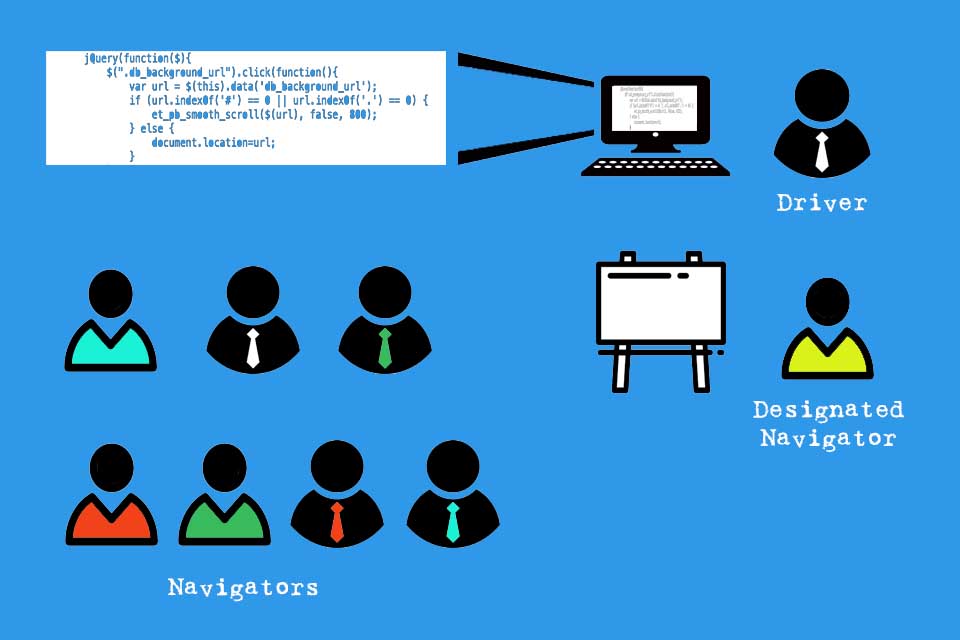
How does Mob Programming work?
What is Code Golf?
‘Smartpedia’ is our glossary for people in organisations involved in software development, project management and product management. It is for precisely these people and their organisations that we have been developing and modernising software since 2012. Pragmatic. ✔️ Personal. ✔️ Professional. ✔️
Get to know t2informatik from Berlin as your development partner.