
Empathy without ecpathy exhausts managers
Expand the table of contents
What ecpathy really means and why it strengthens team resilience
The neurobiological price of a lack of boundaries
The hidden dynamic
Team resilience comes from clarity, not from taking on everything
Ecpathy in practice
The reflective question that changes everything
Developing ecpathy as a leadership skill
Why teams become stronger when leaders protect themselves
When empathy becomes an avoidance strategy
Conclusion: Ecpathy is not withdrawal
A team leader in a coaching session:
‘I constantly take everything on board. If someone in the team is frustrated, I try to balance things out. If private problems arise, I think along with them. When tensions arise, I feel responsible. In the evening, I end up exhausted on the sofa and in the morning I get up feeling worn out.
I invest energy, time and heart and soul in my team, and yet they work alongside each other instead of with each other.’
This manager was exhausted because she lacked a crucial protective factor: ecpathy.
What ecpathy really means and why it strengthens team resilience
The term ecpathy comes from psychology and describes the conscious ability to distance oneself emotionally without losing connection to the other person. It is the counterpart to empathy, but rather its necessary complement.
Empathy opens us up and ecpathy protects us.
Empathy allows us to understand what is going on inside others. Ecpathy helps us decide what is our responsibility and what is not.
Managers who rely solely on empathy unconsciously take on emotions that do not belong to them. They carry the team around with them like a backpack full of stones. They believe that good leadership means being there for everyone, whenever possible.
I so often hear managers say, ‘My door is always open to employees.’ That is not a good idea.
The neurobiological price of a lack of boundaries
When managers constantly take on the emotions of what is happening in the team, they activate their own stress system. The nervous system runs in continuous mode and is ready to react, rescue and regulate.
From a neurobiological point of view, this costs an enormous amount of energy. The autonomic nervous system remains on alert. The sympathetic nervous system, responsible for fight-or-flight responses, dominates. The parasympathetic nervous system, which is responsible for recovery and regeneration, hardly gets a chance to function. Thoughts continue to race even after work and during sleepless hours.
The prefrontal cortex, responsible for strategic thinking and clear decisions, becomes increasingly blocked. Instead, the amygdala, our internal alarm system, takes over. The result: managers react more impulsively, make poorer decisions and lose sight of the big picture.
The result: leadership becomes reactive instead of confident, and you become exhausted.
Even more problematic: teams sense this exhaustion. They interpret it as insecurity. And insecurity is poison for trust.
A team that perceives its manager as overworked becomes more cautious. It withholds information. It is careful and considerate. Team members ask themselves: ‘Can I get away with this?’ or ‘Maybe I’d better not bring it up, she’s already got enough on her plate.’
Well-intentioned care creates emotional distance. Distance leads to creeping mistrust. The opposite of what empathy should create. Empathy without ecpathy is like hobbled through the world on one leg.
The hidden dynamic
I keep seeing the same pattern in my coaching sessions: managers report that their team is ‘strangely quiet’. There are hardly any conflicts, hardly any questions are asked, and issues are rarely addressed directly.
At first glance, this sounds good, but on closer inspection, it is alarming.
This calmness is not a sign of growing independence. It may be a sign of protection. The team has learned not to put additional pressure on the manager. Problems are resolved among themselves or not at all. Conflicts continue to smoulder unspoken. Important issues are left unaddressed.
The manager notices that ‘something is wrong,’ but cannot put their finger on it.
What is missing is an early warning system. And that can only be created if managers themselves are stable enough to hear unpleasant truths.
Team resilience comes from clarity, not from taking on everything
Team resilience is the ability of a team to remain capable of acting even under pressure, to resolve conflicts constructively and to emerge stronger from crises. It is based on three pillars: trust, clarity and self-efficacy.
- Trust requires reliability, not constant availability.
- Clarity requires boundaries, not putting up with everything.
- Self-efficacy requires space, not constant relief.
When managers absorb every emotion, they take away something crucial from the team: the chance to deal with it themselves. The team remains dependent, and dependence is the opposite of resilience.
Ecpathy in practice
Ecpathy does not mean indifference. It means conscious decision-making.
Situation 1: A team member comes to you feeling frustrated.
Without ecpathy: You listen, take on the frustration, brood over it in the evening, look for solutions, feel responsible.
With ecpathy: You listen, acknowledge the frustration and ask: ‘What specifically do you need from me right now?’ You don’t take on the problem. You clarify your role.
Situation 2: Two team members are arguing. The tension is palpable.
Without ecpathy: You try to mediate between the two, calm the mood, find a compromise. You take responsibility for the conflict.
With ecpathy: You address the conflict and hand back responsibility for the solution: ‘You have different points of view. How do you want to resolve this? Do you need help with the resolution or can you sort it out yourselves?’
Situation 3: The team is exhausted. The workload is high.
Without ecpathy: You try to make everything easier. You take on tasks, cushion the blow and work longer hours yourself.
With ecpathy: You clearly state the situation: ‘We are currently beyond our limits. What can we specifically leave out, postpone or redistribute?’ You moderate solutions instead of shouldering them alone.
The difference is subtle but crucial. In all three cases, the manager remains approachable. But they do not take on what the team can do themselves.
The reflective question that changes everything
Managers who want to develop empathy do not need complicated methods. They need a single, recurring reflective question:
‘Which of these things belong to me and which do not?’
Ask yourself this question every day: after conversations, after meetings and at the end of the day. This is how you train ecpathy.
What is your responsibility as a manager and what is the responsibility of the team?
It is your responsibility to create the proper conditions, provide guidance and address conflicts.
It is not your responsibility to bear all the feelings, solve all the problems or resolve all the tensions.
Making this distinction is not harsh. It is clarity, and clarity is the basis of security.
Developing ecpathy as a leadership skill
Ecpathy can be trained like a muscle.
Here is a specific exercise that you can implement immediately:
1. Observe your physical reaction.
When a team member approaches you emotionally, pay attention to your body. Does your breathing become shallower? Do your shoulders tense up? Do you feel pressure in your chest?
2. Breathe out consciously.
A long, conscious exhalation signals to your nervous system: ‘I am safe. I don’t have to take over.’ Three deep breaths are often enough.
3. Create inner space.
Say to yourself internally: ‘I am listening, I am trying to understand, and I am not taking responsibility for my colleagues’ feelings.’ This sentence helps to distinguish between perception and taking over.
4. Clarify your role.
Ask: ‘What specifically do you need from me?’ This will help you and the team member to move away from vague expectations.
This exercise takes less than two minutes, but it fundamentally changes the dynamic.
Why teams become stronger when leaders protect themselves
The idea that leadership means being there for everyone unconditionally is deeply ingrained. This is especially true for leaders who are serious about caring for others and taking responsibility.
But it is precisely this attitude that undermines team resilience. Teams don’t need leaders who can endure anything. Teams need leaders who remain clear-headed.
When you remain internally stable as a leader, you give the team something crucial: reliability. Not in the sense of availability, but in the sense of consistency. You remain approachable without losing yourself.
That is true stability, and that is exactly what resilient teams need.
When empathy becomes an avoidance strategy
There is another aspect that is rarely discussed: sometimes managers use excessive empathy as an avoidance strategy.
- They listen, absorb, empathise and thereby avoid leading clearly.
- They avoid making uncomfortable decisions.
- They avoid addressing conflicts directly.
- They avoid giving back responsibility.
Because as long as they take care of everyone’s feelings, they feel needed, valuable and indispensable. But that is precisely what makes teams fragile.
Ecpathy breaks this pattern. It requires managers to be not only compassionate, but also courageous. Courageous enough to say, ‘That’s not my job.’ Courageous enough to leave responsibility where it belongs.
This can be very uncomfortable, but also very effective.
Conclusion: Ecpathy is not withdrawal
Ecpathy is often misunderstood as coldness, disinterest or even withdrawal. The opposite is true.
Ecpathy is the conscious decision to remain present without losing oneself. It enables managers to be truly there, not as an emotional buffer, but as a clear source of guidance.
It enables teams to become self-effective and develop team resilience.
The question is not only: ‘Am I empathetic enough?’ It also requires the question: ‘Am I clear enough in my boundaries?’
Because only those who remain internally stable can truly provide support to others.
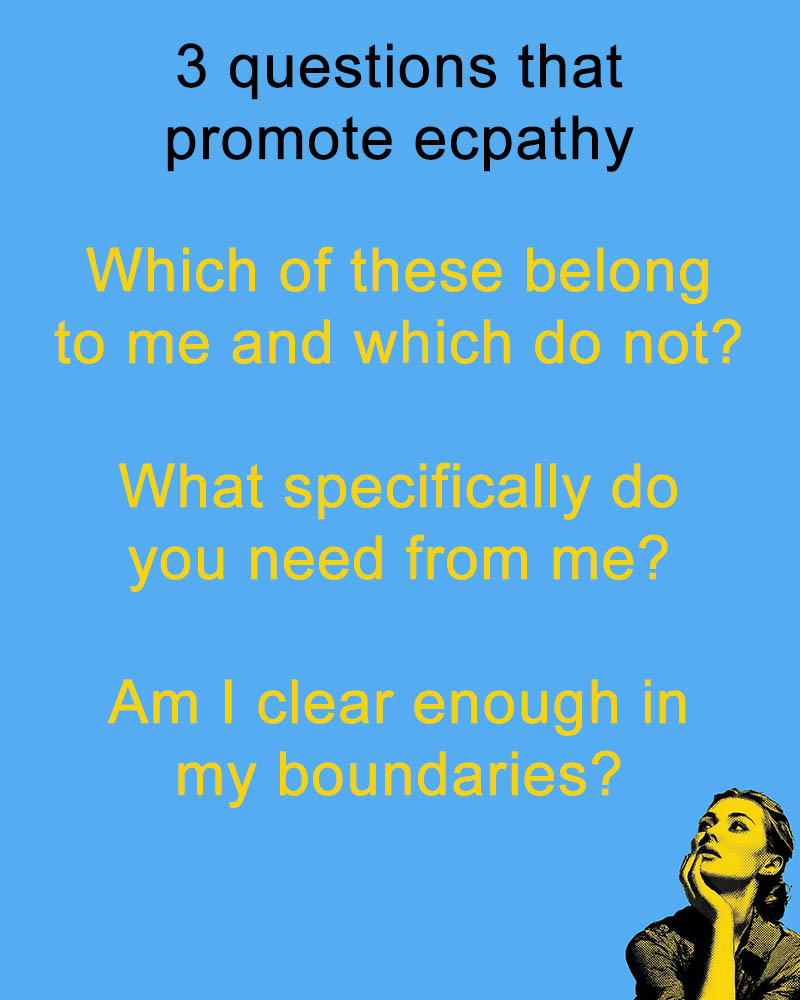
Figure: 3 questions that promote ecpathy
Brigitte Hettenkofer helps managers and teams to strengthen cooperation in the long term. Her focus is on team resilience, trust and effective leadership – practical, neurobiologically based and directly applicable. In her German book ‘Team Resilienz: Das Geheimnis robuster, optimistischer und lösungsorientierter Teams.’ she shows how teams can remain capable of acting even under pressure.
Would you like to discuss empathy and ecpathy as a multiplier or opinion leader? Then share this post in your networks.
Here you will find an interesting arcticle about: Why agile when there is antifragile?
Brigitte Hettenkofer has published three more posts on the t2informatik Blog:

Gaming as catalyst for empathy and team resilience

Radical acceptance

Trust destroyers in everyday management

Brigitte Hettenkofer
Brigitte Hettenkofer (Dipl. Theologin) is passionate about helping people to develop their inner strength and resilience. For twenty years she has been offering consulting, training and team development with her company NeuroResilienz, helping people and teams to remain resilient and psychologically resilient.
Her focus is on inspiring and encouraging teams to navigate strengthened through challenging phases. To realise her vision, she has developed the Team Resilience Wheel, a tool that helps teams recognise and build on their resilience potential: Becoming Stronger Together.
In the t2informatik Blog, we publish articles for people in organisations. For these people, we develop and modernise software. Pragmatic. ✔️ Personal. ✔️ Professional. ✔️ Click here to find out more.