
AI and education: Why we’re testing the wrong things
An imaginary conversation between Peter Drucker and Prof. Dr Juliane Weber, Dean of a German university
This is the eighth instalment in a series of fictional conversations. In it, Peter Drucker meets well-known figures and ordinary people like you and me – people with different roles within organisations who embody technological optimism, pragmatic application, historical caution and economic reality.
Today, he is talking to Prof. Dr Juliane Weber, Dean of a German university. She has invited him because she would like to better understand his views on education. She is impressed by his books, his perspectives and his rigorous reasoning in the field of business administration, and she would like to understand these better and discuss them with him.
The collapse of traditional examinations
Prof. Dr Weber: Mr Drucker, thank you very much for visiting and for our conversation. I really appreciate it.
Our traditional university system is currently collapsing before our very eyes. We are facing a genuine crisis in the education sector. Students are submitting essays in droves. These essays are stylistically perfect and yet, at the same time, somehow ‘mediocre’. The structure of the content is flawless and yet, somehow, ‘meaningless’. No one on my teaching staff knows any longer who actually wrote these texts. We are losing absolute certainty about our students’ genuine academic achievement.
The worst part, however, begins much earlier in young people’s lives. Schools are not preparing young people for this new technological world. For centuries, schools have functioned as direct preparatory institutions for university. Unfortunately, pupils there still learn, above all, rote memorisation. They reproduce pre-formulated answers to standardised questions set by teachers, including in exams. Then they arrive at university and use artificial intelligence for precisely this kind of blind reproduction. The entire traditional education system is failing across the board. There is a complete lack of the ability to think independently and critically.
Peter Drucker: Ms Weber, I am also looking forward to our conversation and am delighted to be here today.
You are describing a fascinating phenomenon of our time. However, in my view, this crisis is merely a symptom of a much greater change. We are currently experiencing a massive transformation across the entire knowledge society. Artificial intelligence is simply laying bare, with utter ruthlessness, the weaknesses of an old and rigid system.
For decades, universities have functioned like industrial factories. Knowledge was imparted in a standardised manner and tested in a standardised way. Schools have conditioned people in advance for this intellectual factory. Now a machine is taking over this standardised production of texts with absolutely flawless processes. It is the logical next step in the ongoing automation of routine tasks. In the past, this only applied to hard physical labour. Today, it affects routine intellectual work.
Prof. Dr Weber: That may well be absolutely correct from a philosophical point of view. However, we have an acute and pressing problem in the day-to-day practice of our faculty. We must absolutely uphold academic integrity. If we award marks for work that was ultimately produced by machines, this massively devalues our degrees. The entire credibility of our institution is at stake.
Peter Drucker: I can see your point. How do you intend to prevent this?
The misguided hunt for cheating
Prof. Dr Weber: My immediate reaction as Dean is quite clear: we must completely ban this technology from exams and coursework. We need secure software capable of automatically detecting artificial intelligence. We must find the digital tools to unambiguously expose machine-generated texts. Only in this way can we prevent genuine cheating and punish the perpetrators. We must make examinations secure again and restore the old order at the university.
Peter Drucker: I can understand this reaction, but in my view it is completely the wrong approach. And I’d like to explain why. You are currently looking for the wrong mistake. You are vehemently combating the symptom whilst ignoring the actual illness of the system. Let’s put forward a provocative thesis for the rest of our discussion: if a machine can effortlessly write an academic essay, then that essay was probably completely worthless anyway.
Prof. Dr Weber: That is an extremely harsh accusation levelled at the entire academic teaching system of recent decades. You are denying our previous teaching methods any intellectual value whatsoever.
Peter Drucker: It is the sober reality of modern knowledge work. The value of an intellectual task does not lie in the hours of effort spent producing it. The true value lies in the effectiveness of the results and in the genuine gain of new insight. For years, we have had students solving tasks that offer no real intellectual added value to the world. Clinging desperately to these old examination formats is a sure-fire recipe for failure. You want to ban the new tools. Instead, you should radically change the tasks.
Prof. Dr Weber: It’s not quite that simple. So we’ve been assessing the wrong things all these years. We’ve been evaluating sheer hard work and the correct formatting of countless sources. We have prioritised the formal process over actual deep thinking. Have I understood you correctly?
Peter Drucker: That is exactly right. You have been testing the mere processing of information. You have been assessing the ability to reorder data that is already known. This form of processing has now become a cheap commodity. A machine can now do this faster and with fewer errors than any hard-working student.
The end of pure factual knowledge
Prof. Dr Weber: This inevitably forces us to fundamentally rethink our approach at the university. If the mere processing of information really is a cheap commodity, what is left for us? The university is currently losing its historic and proud role. For centuries, we were the sole guardians of data and reliable facts. Artificial intelligence has now finally broken this long-standing monopoly. Today, everyone has the entire body of world knowledge in their pocket, ready to be accessed at any time.
Peter Drucker: This is a tremendous liberation for the human mind. Pure factual knowledge has become a widely available commodity. It is an absolute commodity in the market of knowledge. And this has not just been the case since the advent of AI; this development began with the availability of the internet and search engines. However, this is not a threat to academic education. Rather, it is an enormous opportunity for further development. The university no longer needs to serve merely as a repository for facts. Professors no longer need to give boring lectures that merely involve reading old books aloud.
Prof. Dr Weber: So a move away from mere rote learning is therefore inevitable and even desirable? The mere recitation of texts learnt by heart really does lose all meaning. We would have to abandon this antiquated pedagogical model completely. But many teachers find it incredibly difficult to relinquish this familiar control over knowledge.
Peter Drucker: It’s partly understandable from a human perspective, but the modern knowledge society doesn’t need living human databases. It needs people with genuine, deep-rooted education and foresight. The definition of an educated person is currently undergoing a radical change. Facts remain important for understanding the world. However, they are merely the raw material. The mere accumulation of this raw material does not in itself create a single sustainable value. Value is only created through the skilful linking of these isolated facts to form a much larger overall picture. And that is the new task of competent teaching staff. Starting as early as school.
Prof. Dr Weber: We therefore urgently need to move away from the mere imparting of knowledge towards the genuine and practical application of knowledge. Students must learn to deal with this infinite abundance of information in a sensible and purposeful way, and be able to acquire this knowledge in a sustainable manner.
The birth of true judgement
Peter Drucker: We are actually talking here about the birth of true human judgement. This is the very essence of the educated person in the near future. A deep understanding of systems will become the most important quality for professional success. Students must learn the ability to ask the right and precise questions. They must be able to evaluate the seemingly perfect answers provided by machines with the utmost criticality. Educated people therefore stand at the beginning and the end of the process of acquiring knowledge.
Prof. Dr Weber: This is precisely where I see a massive and logical problem in day-to-day practice. How can young people still build up genuine specialist knowledge? This knowledge of their own, stored in their minds, is absolutely essential. Without a strong foundation in a specialist field, we cannot critically scrutinise artificial intelligence at all. We cannot recognise the subtle errors and dangerous deceptions of machines for what they are. How do we acquire this in-depth knowledge when the machine seemingly relieves us entirely of the laborious task of searching for and summarising information?
Peter Drucker: That is undoubtedly the most important educational question of our time. The answer to this requires immense human discipline. The fundamental knowledge of a subject must continue to be acquired through hard work and perseverance. The path to this remains arduous and time-consuming. One can never delegate a genuine understanding of systems to a machine. Students must continue to read primary sources carefully. They must engage intellectually and intensively with complex theories. Fortunately, the pain of learning for ourselves remains with us all.
Prof. Dr Weber: So you’re saying that we use technology as a powerful and helpful tool in everyday life. However, we must continue to painstakingly build our own intellectual foundation, brick by brick.
Peter Drucker: Absolutely right. Only this well-founded knowledge of our own, stored in our minds, enables a truly competent assessment of machine-generated answers. Anyone who has not deeply understood the theoretical foundations of a subject will inevitably become a slave to the machine. They believe everything without question. They cannot critically scrutinise a single statement. Genuine judgement arises exclusively from the combination of hard-earned specialist knowledge and the constant practical application of that knowledge.
Prof. Dr Weber: The targeted development of precisely these analytical skills and the building of a theoretical foundation is therefore our new core task in day-to-day teaching. That is a major challenge.
Peter Drucker: I agree with you there. It is a major challenge for all teachers. However, it is also a major challenge for the learners. After all, the painstaking task of building an intellectual foundation brick by brick is not for everyone. Unfortunately, people are very often lazy.
A radical reform of the curricula
Prof. Dr Weber: We therefore need very concrete ways of implementing a completely new form of teaching. How do we put this into practice at universities in the near future? We cannot simply give old lectures new, modern titles. That would be nothing more than window dressing and would not solve the problem.
Peter Drucker: You do indeed need a radical overhaul of the entire course content. A minor cosmetic tweak is absolutely not enough here. The entire curriculum of every faculty must be rewritten from scratch.
Prof. Dr Weber: As expected, this will trigger enormous resistance across all faculties. Changes to syllabuses normally take many years. What might such a completely new curriculum look like in order to prepare students as effectively as possible?
Peter Drucker: In future, students should be solving real-world and highly complex problems. The traditional, isolated term paper will disappear completely from the curriculum. It will be replaced by genuine interdisciplinary projects. Students will work intensively on real-world challenges from business or society. These tasks may be small or large in scale. In doing so, they will naturally make use of all available technological tools. The use of artificial intelligence will be explicitly required and methodically guided by the teaching staff.
Prof. Dr Weber: And how, then, do we objectively assess the genuine intellectual performance of each individual at the end of the semester?
Peter Drucker: Exclusively through personal and direct dialogue. Students must defend their positions and their results very thoroughly in in-depth oral discussions. They do not explain to the examiners what the machine has written in detail. Instead, they explain in detail why they asked the machine a specific and precise question. They justify in detail why they accepted the machine’s answer or rejected it for valid reasons. They defend their own judgement before a critical panel of genuine experts in the field.
Prof. Dr Weber: This means a significantly greater time commitment for the professors. We are shifting the focus from the solitary task of marking written work to joint oral debate in the seminar room. This is essentially a return to the classical academic disputation of past centuries.
The university of the future
Peter Drucker: That’s lovely, Ms Weber. I’m delighted that you’ve understood it that way. That is precisely what the great university of the future will be. It is once again evolving into a genuine physical and intellectual space for critical exchange. It is once again becoming a place of lively discourse between experienced teachers and curious learners.
Prof. Dr Weber: This refreshing perspective allays my initial deep-seated fear of technological progress. On the contrary, this vision is very powerful and highly motivating. Technology does not undermine the university’s raison d’être. It merely compels us to become once again what we should always have been at our core: a genuine place of deep thought and shared reflection.
Peter Drucker: Ethical reflection will, in future, be at the very heart of all academic education. Machines will handle the rapid calculation of probabilities. They will handle the perfect structuring of vast amounts of data in record time. However, humans will bear the ultimate responsibility. They will evaluate all results according to ethical and moral standards. No machine can ever develop or credibly simulate these profoundly human standards.
Prof. Dr Weber: So, in future, we will no longer be training purely technical experts. We will be training responsible and far-sighted decision-makers. This is a completely new and wonderful guiding principle for our university. And it casts humanity in a new light. It brings people back to what defines them.
Peter Drucker: That has always been, and remains, the highest ideal of true education. The educated person understands the profound consequences of their own actions. They always see the bigger picture, rather than just the small, isolated detail. The university of the future prepares young people for a complex world in which purely specialised knowledge becomes obsolete extremely quickly. A strong character and a well-honed capacity for judgement, however, remain with us throughout our lives and retain their value.
Prof. Dr Weber: I now see a very clear and motivating path ahead for the future shaping of our university. The heavy emphasis on bans and control at the start of our conversation was a serious mistake. We will now invest all our collective energy in the positive reorganisation of teaching.
Peter Drucker: That is the only correct strategic decision for your faculty. Together, we stand at the dawn of a magnificent new era in human education. Those who ask the right questions right now and act courageously will shape this exciting future extremely successfully for everyone.
Notes (partly in German):
This fictional conversation builds on the theoretical foundations described by Dierk Söllner in the first article of this series – Peter Drucker meets AI. Among other things, it addresses the true value of knowledge work.
Dierk Söllner supports specialists and managers in tackling current challenges through professional coaching and offers useful training courses on AI.
Incidentally, the Faculty of Law at the University of Passau has in fact decided, with effect from 1 February 2026, that term papers will no longer be required for ‘advanced seminars’. The university justifies this, amongst other things, on the grounds that the benefits of written assignments can hardly be justified by the costs of marking them, and that AI tools are now also being used in legal practice for research and drafting. In doing so, it is explicitly following the example set by the law faculties at LMU Munich and FAU Erlangen-Nuremberg. Here you can find more details.
At FAU Erlangen-Nuremberg, a middle ground has also been introduced for seminar papers: the oral seminar presentation now counts for 30 per cent of the mark as a ‘defence’ of the paper, to assess whether students can actually defend the content of their own work – so the written assignment remains, but is supplemented by an oral assessment. Here you can find further details.
In the following fictional conversation, Peter Drucker meets his historical adversary, Frederick Winslow Taylor. Taylor is the father of scientific management and always sought to break work down into the smallest, measurable steps. For him, the assembly line was the perfect invention.
Taylor would absolutely love artificial intelligence and use it to perfect and monitor processes to the utmost. Peter Drucker would vehemently oppose this approach. He sees a great danger in the standardisation of creative processes. Knowledge work absolutely requires autonomy and cannot tolerate strict standardisation. Drucker would like to use artificial intelligence in a completely different way. He wants to use it to eliminate all routines once and for all, so that the necessary space for genuine human creativity can finally emerge.
Would you like to support Dierk Söllner or discuss AI and education? Then please share this post within your network.
Dierk Söllner has published more posts featuring Peter Drucker on the t2informatik Blog, including:
The future of human autonomy
Machines calculate, people heal
AI and the question of effective work
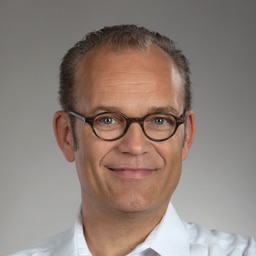
Dierk Soellner
Dierk Söllner’s vision is: “Strengthening people and teams – empathically and competently”. As a certified business coach (dvct e.V.), he supports teams as well as specialists and managers with current challenges through professional coaching. Combined with his many years of comprehensive technical expertise in IT methodological frameworks, this makes him a competent and empathetic companion for personnel, team and organisational development. He runs the podcast “Business Akupunktur“,has a teaching assignment on “Modern design options for high-performance IT organisations” at NORDAKADEMIE Hamburg and has published the reference book “IT-Service Management mit FitSM“.
His clients range from DAX corporations to medium-sized companies to smaller IT service providers. He likes to tweet and regularly publishes expert articles in print and online media. Together with other experts, he founded the Value Stream initiative.
In the t2informatik Blog, we publish articles for people in organisations. For these people, we develop and modernise software. Pragmatic. ✔️ Personal. ✔️ Professional. ✔️ Click here to find out more.