
Machines calculate, people heal
Expand the table of contents
An imaginary conversation between Peter Drucker and the doctor Dr Rashid about the future of medicine and the true value of efficiency
This is the sixth instalment in a series of fictional conversations. In it, Peter Drucker meets well-known figures and people just like you and me. People with different roles within organisations who embody technological optimism, pragmatic application, historical caution and economic reality. Today he is talking to the doctor Dr Rashid.
Dr Rashid’s hospital is like a beehive. People rush frantically along the long corridors. Machines beep on the wards. Nurses push beds swiftly through the corridors. The telephone rings incessantly. Peter Drucker is sitting in a small office. He looks through a glass pane directly into the A&E department. The scene outside is loud and chaotic. Dr Rashid closes the door. The sudden silence in the room stands in stark contrast to the hustle and bustle outside. The doctor looks tired. He sits down at the round table with his guest. The two men begin a conversation about the future of medicine.
Bureaucracy in healthcare
Dr Rashid: Welcome to my hospital, Mr Drucker. You can see the chaos everywhere. We’re drowning in work. All this bureaucracy is suffocating us. I’m pinning my hopes on artificial intelligence. My corridors are overcrowded. The waiting rooms are bursting at the seams. The staff are working at their absolute limit. We have an extreme shortage of qualified staff, and at the same time the documentation requirements are increasing every day.
Peter Drucker: I’m delighted to accept your invitation, Dr Rashid. Hospitals are fascinating places. I have advised many hospital operators during my career. A hospital is a highly demanding organisation. There is scarcely a more difficult task in the world of management. You have highly specialised experts under one roof, complex processes, and you deal with life and death on a daily basis. That is a huge responsibility for everyone involved.
Dr Rashid: The sheer volume of work is literally overwhelming us. My junior doctors spend countless hours in front of screens. They type up endless reports. They analyse data, fill in forms for insurance companies and write reports for the authorities. The actual work with patients suffers massively as a result.
We are currently testing new image recognition software that often diagnoses illnesses more accurately than young doctors. What do you think: should we hand over the diagnosis entirely to the machine? Should we fully automate this process?
Making time for people
Peter Drucker: We must be very careful here. Efficiency is important. No organisation can survive without efficiency. But we must critically question the purpose of efficiency. Why exactly do you want to implement these new programmes? Is it purely about cutting costs? Do the clinic’s owners want to make more profit? Will jobs even end up being cut?
Dr Rashid: Absolutely not. My sole concern is time. We urgently want to free up time for human interaction.
Medicine is, at its core, the craft of healing. A detailed conversation with the patient is an enormously important part of that. We must listen attentively. We must offer comfort. We must allay fears and discuss treatment options together. All of that is currently falling by the wayside.
Peter Drucker: Then you have the right goal in mind. Only this noble goal justifies the use of new technology. You must not view the machine as a mere tool for saving money. You must regard the machine as a liberator of human labour. Technology must serve people. It must not replace them.
Medicine is, above all, about building relationships. A programme can analyse vast amounts of data in seconds. It can recognise complex patterns in X-rays or evaluate blood test results with extreme precision. But a machine can never build a genuine relationship with a person, nor can it inspire trust. Yet healing requires precisely this deep trust.
Dr Rashid: Unfortunately, management often sees things quite differently. For them, it’s primarily the bare figures that count. What counts there is short patient stays. What counts there is the number of doctor and nursing staff positions saved. What counts there is the maximum utilisation of all beds. How can I protect my medical staff from this enormous pressure? The figures dictate our entire daily routine.
Peter Drucker: You must staunchly defend the time gained through technology. Use artificial intelligence as your most powerful tool. Let the computers handle the tedious routine tasks. Write medical reports in seconds using the software. Analyse thousands of images with the algorithms. But immediately fill the time saved with human care. Do not fill the gap with even more patients. Fill the gap with quality. That is the true role of a doctor. That is your most important responsibility as a manager in this hospital.
The administration’s flawed logic
Dr Rashid: That is very difficult. The new programmes cost a lot of money. The pressure to save money is extremely high. Budgets are very tight. If a computer does the diagnostic work of three doctors, the administration immediately wants to make two doctors redundant. The administration calculates purely in terms of working hours. It does not take patient care into account; it only sees the costs.
Peter Drucker: That is, however, a fatal flaw in the administration’s thinking. Management in a hospital is completely different from that in a factory. In a hospital, you don’t produce cars on an assembly line. You produce health and heal sick people. That requires the utmost empathy. It requires human judgement in complex and unclear situations. A car doesn’t need care, whereas a sick person needs it urgently.
You cannot manage the social sector using the standards of pure industry!
Dr Rashid: How do I successfully convey this to the administration? I need very strong arguments for the next negotiation. I have to speak the language of managers and translate the value of care into their system. What is the best way to do this?
Peter Drucker: Highlight the long-term costs and make the hidden losses for the hospital visible.
What exactly happens when care is lacking? Patients return sick more frequently. Treatments fail. Patients do not understand the therapy and take medication incorrectly. Medical errors occur much more frequently. Doctors burn out completely. Nursing staff resign in frustration. The constant turnover of staff costs the clinic an enormous amount of money.
A machine does not heal broken souls. A motivated and attentive doctor does. Technology is meant to relieve the doctor, not replace them.
Dr Rashid: So we need to fundamentally redefine the doctor’s role. In future, doctors will collect less data manually. The machine prepares everything. The doctor will become much more of a direct companion for the patient. They will act as an interpreter of the machine’s results. They will contextualise the facts within the patient’s life.
Peter Drucker: That is precisely the crux of the matter. The machine provides probabilities based on vast amounts of data. It provides pure facts. However, the final decision is always made by the doctor together with the patient. That requires excellent communication. It requires a great deal of time and a great deal of empathy. Use technology for rapid calculation and people for deep understanding.
Cultural change requires strong leadership
Dr Rashid: This calls for a massive cultural shift within our hospital. We all need to learn how to use technology properly. We must never allow ourselves to be controlled by the systems. We must master the technology and rediscover and value our own human strengths.
Peter Drucker: A cultural shift always starts at the very top with leadership. You are the chief physician of this hospital. You set the standard for all other staff. Make it clear every day what is truly valuable. Do not just measure the sheer number of operations. Assess the quality of care as well. Ask patients regularly how they feel. Focus on people’s strengths.
People have hearts and minds. Machines have processors and algorithms. Use both in exactly the right place. Then your hospital will be successful in the long term.
Dr Rashid: I will take these clear insights with me to the next management meeting. We must make the value of medical care very clear. We must show that good medicine is much more than a quick diagnosis by a clever computer. We are fighting for humanity in medicine.
Peter Drucker: That is your most important task as a manager. Never lose sight of the human element. Technology is a wonderful servant to us all, but it is a very poor master. I wish you every success on this challenging journey.
Dr Rashid: Thank you for this clear and open conversation. It gives me a great deal of strength for the upcoming changes in our organisation.
Notes:
This fictional conversation builds on the theoretical foundations described by Dierk Söllner in the first article of this series – Peter Drucker meets AI. Among other things, it addresses the true value of knowledge work.
Dierk Soellner supports specialists and managers in tackling current challenges through professional coaching and offers useful training on AI.
In his book Management: Tasks, Responsibilities, Practices, Peter Drucker provides interesting insights as a consultant for large and small businesses, public authorities, hospitals and schools.
The most important takeaway from today’s conversation is: use the time saved by technology to focus on people’s true strengths. Strengths such as empathy, communication or providing support during difficult phases of change. Managers should recognise and protect the value of human connection. They should complement the language of pure numbers with the language of human qualities, for only in this way will employees remain motivated and healthy, and customers feel well looked after. The aim is to find the right balance between machines and people, and to chart a course towards a humane and efficient organisation.
In the next fictional conversation, Peter Drucker meets Satya Nadella, the CEO of Microsoft. In recent years, Nadella has completely transformed Microsoft and established a culture of continuous learning. The discussion centres on the interplay between technology and effectiveness within a global corporation, and the challenges this presents for managers.
Would you, as an influencer or thought leader, like to discuss the future of medicine and the true value of efficiency? Then please share this post within your network.
Dierk Soellner has published more posts featuring Peter Drucker on the t2informatik Blog, including:
AGI without clear customer benefits and compass
Solution seeks problem
The future of human autonomy
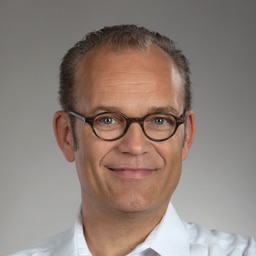
Dierk Soellner
His clients range from DAX corporations to medium-sized companies to smaller IT service providers. He likes to tweet and regularly publishes expert articles in print and online media. Together with other experts, he founded the Value Stream initiative.
On the t2informatik blog, we share knowledge and experience with people in organisations. And it is for precisely these people that we have been developing and modernising software since 2012. Pragmatically. ✔️ Personal. ✔️ Professional. ✔️ Get to know t2informatik as your development partner.