
Leading with feeling
Emotions shape collaboration more than many people realise. They influence how people perceive situations, make decisions and interact with each other. In teams, this has a direct impact on trust, communication and the quality of collaboration. Good team leadership therefore requires emotional intelligence, i.e. the ability to recognise and understand your own emotions and use them in a way that promotes constructive cooperation.
This article is about how you can use emotional competence to develop a supportive team culture. You will learn how strongly moods affect others and why your emotional state is crucial to how you perceive situations and people.
It is worth taking a quick look at your own patterns at the outset. Two questions will help you to classify your own inner attitude:
- Do you tend to see the similarities with other people or do you focus more on what distinguishes you from them?
- Do you feel emotionally stable and open to new developments and dealing with people who think differently, or do you tend to seek security and separation?
Your answers are an indicator of how you emotionally evaluate situations. The good news is that if you understand your feelings, you can be more conscious of how you affect others and positively influence teamwork.
Separation or connection?
Psychologist Barbara Fredrickson has investigated how strongly mood and inner attitude influence perception. She is one of the leading voices in positive psychology. Her research team investigated how positive or negative feelings change the experience of connection. [1]
In one of their studies, people were asked to assess their relationship with a close friend or relative using a graphical model. This model showed different degrees of overlap between two circles and made it possible to see how strongly closeness or distance was experienced. The research team then put the participants in a positive, negative or neutral mood and repeated the assessment.
The result was clear. A positive mood led participants to perceive more similarities and stronger overlaps. A negative mood, on the other hand, led to a narrower distinction and less perceived closeness. Interesting, isn’t it?
You can apply this insight directly to yourself. The following graphic shows the model that was also used in the study.
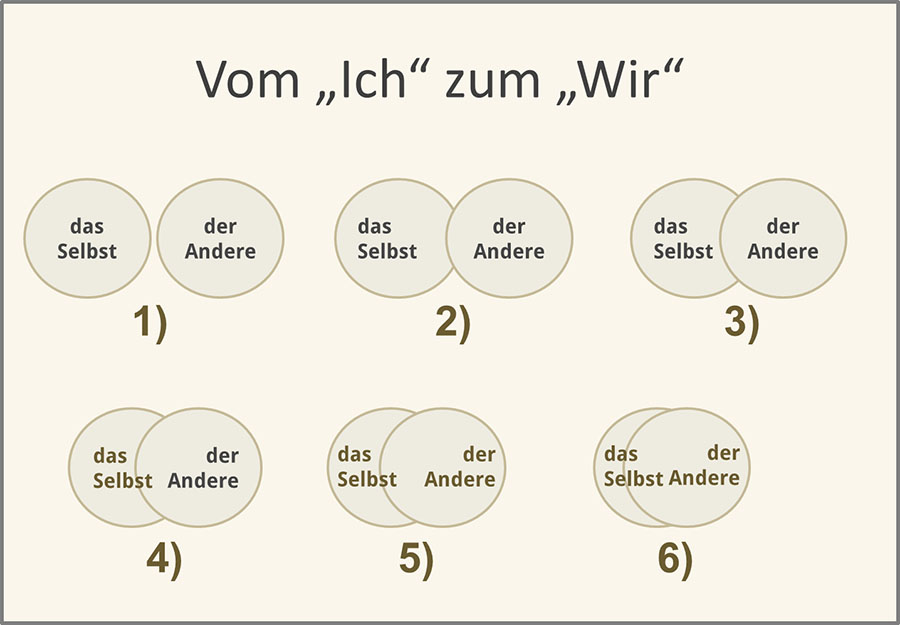
Figure 1: From ‘I’ to ‘We’ – overlaps between the self and the other
Think of someone from your work environment and a positive experience you shared. Which of the options best describes your feeling of connection?
Now think of the same person in a difficult situation, such as a conflict or when you were feeling down. Which image would best characterise this situation?
Is there a difference?
It is precisely these differences that show how much our mood shapes our experience. This is important for teams. Individual moods not only influence our own perceptions, but also the quality of relationships in the workplace. A positive mood promotes openness and connection, while a negative mood increases distance.
Are you in chaos or are you in harmony with yourself and others?
Our inner state has a significant impact on the quality of our collaboration. This has also been demonstrated by research conducted by the HeartMath Institute, which studies the connections between emotions, perception and physiological responses. [2] Emotions have a particularly strong influence on our perception, especially in times of great change. When we feel secure and connected, we are more willing to take risks and try new things.
This inner state can even be measured. The heart rate is recorded via the pulse and converted into heart rate variability (HRV). The following figure shows two typical patterns: a chaotic state and a coherent state, which were triggered in the study by feelings such as frustration or appreciation.

Figure 2: Chaos with frustration or coherence with appreciation? Our feelings generate an electrical message!
Typical triggers can be:
- an authoritarian or aggressive leadership style,
- the fear of losing one’s job if one does not act in accordance with the rules,
- the concern of losing recognition within the team if one shows weakness,
- the pressure to cope with technical or market-driven developments quickly enough, and
- the constant fear of competition or comparison.
In such situations, feelings such as fear, frustration or powerlessness dominate. The body reacts with a constricted system geared towards short-term coping. This pattern made evolutionary sense when fighting, fleeing or freezing were relevant to survival. For modern teamwork, however, this state is hindering. It leads to typical limitations:
- Perception narrows and focuses on the perceived danger. Other solutions remain invisible.
- Cognitive abilities are limited. In extreme stress situations, tunnel vision develops, making clear thinking difficult.
- The need for security increases significantly. Familiar solutions are preferred, even if they are not appropriate for the situation.
- The feeling of connectedness decreases. People feel more separated from others and feel left alone with challenges.
This dynamic affects not only the individual, but also the team culture. A climate of uncertainty or narrow-mindedness can spread throughout the entire team.
Coherence brings inner clarity and unlocks resources
The state of chaos is contrasted by a completely different inner state: coherence. This refers to a feeling of inner order, clarity and balance. In moments when we feel appreciation, calm or confidence, our body and mind work together more harmoniously. This harmony has a significant effect on our perception and behaviour.
Coherence leads to a number of helpful effects that also play an important role in team leadership. When you are in a coherent state, your experience and actions change on several levels:
- Your mood is more positive. Feelings such as joy, trust and serenity give you emotional stability and strengthen your self-efficacy.
- You feel more connected. You develop a desire to support others, to help them or to encourage them.
- You become more courageous and open. New or unfamiliar solutions seem more achievable, even if they appear challenging at first.
- Your perception opens up to more aspects. Opportunities and alternative paths become more recognisable without losing focus on the essentials.
- Your inner voice becomes clearer. Intuition and experience become easier to use, especially in complex situations.
- Your sensitivity to moods increases. You become more aware of the needs of colleagues, employees and partners, which strengthens appreciative relationships.
Coherence therefore describes an inner state in which feelings and reason work together. In this state, people have more of what they already possess: clarity, creativity, decision-making ability and social awareness.
This state can be consciously created and trained. Thoughts, feelings and breathing are effective starting points. Many people use short exercises before meetings, decisions or challenging situations because they immediately feel the difference in their own behaviour.
How inner states influence team culture
How we feel inside shapes not only our perception, but also the way we work together as a team. Feelings such as security, confidence or serenity have a different effect than fear, frustration or tension. They determine how we communicate, make decisions and build trust.
Have you ever noticed someone’s emotional signals, even when they haven’t said anything? Research by the HeartMath Institute shows that the electromagnetic field around a person, which can be measured up to two metres away from the body, is influenced by the heartbeat and can even affect other people’s brain waves. [3] My own experiences confirm this. In conversations or team situations, I often perceive whether someone is tense, insecure or has a positive inner attitude. Such vibrations are transmitted, often subtly but clearly perceptible.
When people harbour feelings such as fear, frustration or powerlessness for a long time, this emotional energy becomes noticeable in the team. It promotes caution, withdrawal or defensive communication. Over time, this can create an atmosphere that inhibits innovation, hinders learning processes and blocks teams in their performance.
Positive inner states, on the other hand, create a completely different dynamic. When team members feel secure, valued and connected, their perception focuses more on commonalities and support. They are more open to each other, more willing to try new things and more likely to take on responsibility. This state strengthens trust, promotes cooperation and improves the ability to overcome challenges together.
Conclusion: Good team leadership requires feeling and emotional intelligence
What does all this mean in practice and, for example, for the management of project teams?
A manager who understands these connections consciously uses their knowledge when working with other people. They are aware of their own patterns of thinking and feeling and know how strongly these influence their external impact. With a positive, appreciative attitude, they strengthen the team spirit, the feeling of connectedness and ultimately the entire team culture.
Emotional competence is demonstrated by being mindful of one’s own state of mind and having the courage to shift from tension to a calmer, more coherent state. It is also demonstrated by setting an example: those who radiate inner calm, attentiveness and appreciation noticeably strengthen team spirit.
A responsible manager also supports their team members in strengthening their own emotional competence. This can be done in everyday situations, in reflection, in team discussions or through targeted training and coaching programmes. Step by step, this creates a common understanding of how emotions influence collaboration and how to deal with them constructively.
Notes:
If you are curious about how you can use your own emotional energy more consciously, Martina Baehr offers the opportunity for a personal consultation. In a free energy call, she will talk to you about your current situation and possible steps you can take.
[1] Barbara Fredrickson: The Power of Positive Emotions: How a Positive Attitude Can Change Your Life for Good
[2] HeartMath Institute Research Library: Publications
[3] In school, we used to be taught that the heart primarily follows signals from the brain. What is less well known is that the heart actually sends more information to the brain than vice versa. These signals influence emotional processing and higher cognitive functions such as attention, perception, memory and problem solving. The heart and brain are therefore not in a one-sided relationship, but in a continuous exchange. Find out more about the influence of heart activity on brain function here.
Would you like to discuss the importance of emotions in leadership as a multiplier or opinion leader? Then share this post in your network.
Martina Baehr has published further articles on the t2informatik Blog, including

Goodbye, pressure to succeed

Breaks: Underrated power tool or waste of time?

How do you create feel-good moments?

Martina Baehr
On the t2informatik Blog, we share knowledge and experience with people in organisations. We have been developing and modernising software for them since 2012. Pragmatically. ✔️ Personal. ✔️ Professional. ✔️ Get to know t2informatik as your development partner.